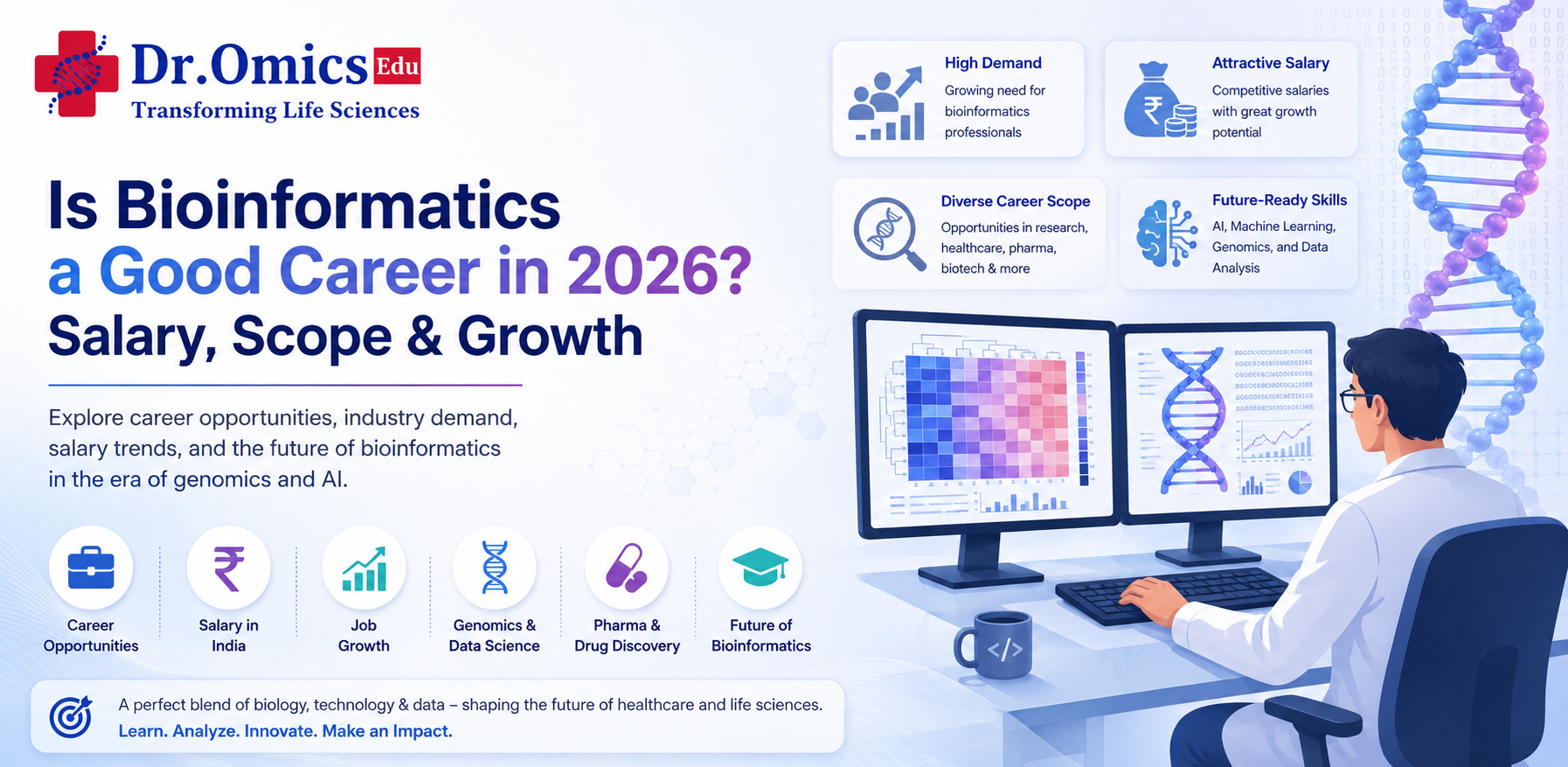
Is Bioinformatics a Good Career in 2026? Salary, Scope & Growth
Dr. Omics Edu Team · · Updated
Introduction
The life sciences industry is evolving rapidly, driven by breakthroughs in genomics, artificial intelligence, precision medicine, and biotechnology. As biological data continues to grow at an unprecedented pace, organizations need skilled professionals who can transform complex datasets into meaningful insights. This growing reliance on computational biology has made bioinformatics one of the fastest-growing career fields in life sciences.
If you're wondering bioinformatics is a good career, the answer in 2026 is increasingly positive. From healthcare and pharmaceutical companies to research institutes and biotech startups, bioinformatics professionals are playing a vital role in solving real-world biological challenges. With excellent career opportunities, competitive salaries, and continuous technological advancements, the future of bioinformatics looks exceptionally promising.
What is Bioinformatics?
Bioinformatics is an interdisciplinary field that combines biology, computer science, mathematics, and statistics to analyze biological data. It enables researchers to study DNA sequences, gene expression, proteins, disease mechanisms, and drug interactions using computational tools.
Today, bioinformatics supports several cutting-edge applications, including next-generation sequencing (NGS), personalized medicine, cancer genomics, microbiome research, drug discovery, vaccine development, and artificial intelligence in healthcare.
Bioinformatics Career Scope in 2026
The bioinformatics career scope has expanded significantly over the past decade. Earlier, career opportunities were largely limited to academic research, but today professionals are employed across multiple industries, including biotechnology, pharmaceuticals, healthcare, agriculture, diagnostics, and environmental sciences.
Popular career roles include:
- Bioinformatics Analyst
- NGS Data Analyst
- Computational Biologist
- Genomics Scientist
- Clinical Bioinformatician
- Research Associate
- Data Scientist (Life Sciences)
- Drug Discovery Scientist
- Bioinformatics Software Developer
- AI and Machine Learning Specialist in Healthcare
With increasing investments in genomics and precision medicine, organizations are actively seeking professionals who possess both biological knowledge and computational expertise.
Bioinformatics Salary in India
One of the most common questions among students is about bioinformatics salary in India. Salaries depend on qualifications, technical skills, industry, and experience, but overall compensation has steadily improved due to rising demand.
Typical salary ranges include:
- Freshers (0–2 years): ₹3.5–6 LPA
- Mid-level professionals (3–5 years): ₹6–10 LPA
- Senior Bioinformaticians (5–10 years): ₹10–18 LPA
- Specialists in AI, Genomics, or Drug Discovery: ₹15–30+ LPA
Professionals with expertise in Python, R, Linux, cloud computing, machine learning, and NGS analysis often receive higher salary packages, particularly in multinational pharmaceutical companies and global research organizations.
Why Bioinformatics Job Growth is Rising
The rapid bioinformatics job growth is being driven by several emerging technologies and healthcare advancements.
Genome sequencing has become faster and more affordable, generating enormous volumes of biological data that require specialized analysis. Precision medicine relies heavily on genomic information to personalize treatments, while pharmaceutical companies use bioinformatics to identify drug targets and accelerate drug development. Artificial intelligence is also expanding the role of bioinformatics in disease prediction, biomarker discovery, and clinical decision-making.
As these technologies continue to evolve, bioinformatics professionals are becoming essential across both research and industry.
Bioinformatics Demand in 2026
The bioinformatics demand 2026 is expected to remain strong across multiple sectors.
Key areas contributing to this demand include:
- Next-generation sequencing (NGS)
- Precision medicine
- Cancer genomics
- Drug discovery
- Clinical diagnostics
- Agricultural genomics
- Multi-omics research
- Single-cell sequencing
- Artificial intelligence in healthcare
Government-funded genome projects, biotechnology startups, pharmaceutical companies, and diagnostic laboratories continue to invest heavily in computational biology, creating a steady demand for skilled professionals.
Skills That Employers Look For
Success in bioinformatics requires both biological understanding and computational expertise.
Some of the most valuable skills include:
- Molecular Biology and Genetics
- Python or R programming
- Linux operating system
- NGS data analysis
- Statistics and data analysis
- Database management
- Machine learning fundamentals
- Data visualization
- Scientific writing and communication
Professionals who regularly update their technical skills remain highly competitive in this rapidly evolving field.
Challenges in Bioinformatics
Although bioinformatics offers excellent career opportunities, it requires continuous learning. New sequencing technologies, programming tools, and analytical methods are introduced regularly, making it essential to stay updated with the latest developments.
Beginners may initially find programming and statistics challenging, but practical experience through projects, internships, and hands-on training helps build confidence and improve employability.
Conclusion
For students who enjoy biology, technology, and problem-solving, is bioinformatics a good career is no longer a difficult question to answer. The expanding bioinformatics career scope, attractive bioinformatics salary in India, and continuous bioinformatics job growth make it one of the most promising career choices in life sciences.
The increasing bioinformatics demand 2026, supported by advances in genomics, artificial intelligence, and precision medicine, ensures strong career prospects across research, healthcare, and biotechnology industries. As the future of bioinformatics continues to evolve, professionals equipped with the right technical and analytical skills will be well-positioned to contribute to scientific innovation while building a rewarding and stable career.
