Course Live All Levels EIMT

Next Generation Sequencing Data Analysis: Hands-on NGS Data Analysis for Genomic Research Projects

Master Genomic Data Science with AI-Driven Bioinformatics Pipelines Bridging Experimental Biology and Computational Intelligence for Research Excellence

  • 5.0/5
  • English
  • Updated May 2026
Next Generation Sequencing Data Analysis: Hands-on NGS Data Analysis for Genomic Research Projects

About this course

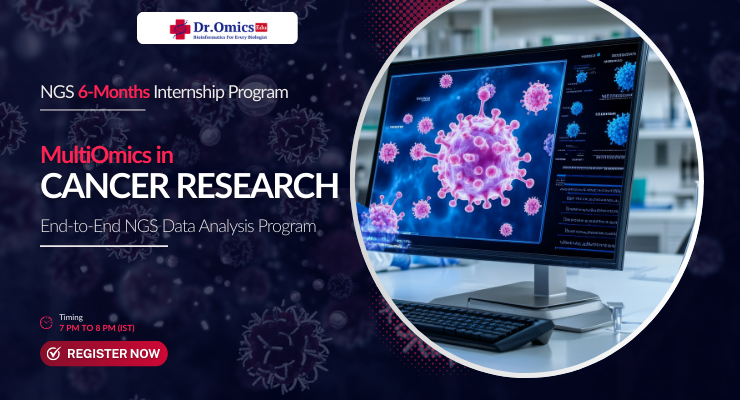
This intensive 6-month program is designed to transform biological researchers into proficient genomic data scientists through an immersive, hands-on curriculum. Participants will navigate the entire NGS workflow, from raw signal processing and Quality Control (QC) to advanced secondary and tertiary analysis. The course integrates cutting-edge AI and Machine Learning models to enhance variant calling accuracy and interpret complex single-cell transcriptomics data. By working on real-world genomic research projects, you will master the Linux command-line, R/Bioconductor environments, and automated Nextflow pipelines. This training bridges the gap between wet-lab experimentation and dry-lab computational insights, preparing you for high-impact roles in precision medicine, drug discovery, and evolutionary genomics.

What you will learn

Sequencing Fundamentals: Understand the chemistry and physics of Illumina, Oxford Nanopore, and PacBio platforms.
Data Preprocessing: Master tools like FastQC, Trimmomatic, and MultiQC for rigorous quality assessment.
Alignment & Mapping: Perform high-accuracy read mapping using BWA, Bowtie2, and STAR aligners.
Variant Discovery: Identify SNPs, Indels, and Structural Variants using GATK and AI-driven variant callers.
Transcriptomics (RNA-Seq): Analyze differential gene expression and functional enrichment using DESeq2 and ClusterProfiler.
AI in Genomics: Apply Deep Learning models for base calling and predictive oncology analytics.
Pipeline Automation: Build reproducible genomic workflows using Nextflow and Snakemake.

Skills you will gain

Bioinformatics Genomics Linux Python R-Programming Machine-Learning Cloud-Computing Data-Visualization Scripting Statistics |Automation Pipelines
Certification

Available

Issued by EIMT

Course curriculum

1 module

  • Module 1: Introduction to NGS Technologies and Genomic Data Formats (FASTQ, BAM, VCF).
  • Module 2: Essential Linux Command Line and Shell Scripting for Big Data.
  • Module 3: Quality Control, Read Trimming, and Reference Genome Mapping Strategies.
  • Module 4: DNA-Seq Analysis: Germline and Somatic Variant Calling Workflows.
  • Module 5: RNA-Seq Analysis: From Transcript Quantification to Pathway Enrichment.
  • Module 6: Epigenomics and Metagenomics: ChIP-Seq, ATAC-Seq, and Microbiome Profiling.
  • Module 7: Integrating AI and Machine Learning for Genomic Pattern Recognition.
  • Module 8: Capstone Project: End-to-End Analysis of a Real-World Genomic Dataset.

What you need to start

  • A basic understanding of Molecular Biology (DNA/RNA/Proteins).
  • Familiarity with computer operations (no prior coding experience required; we start from scratch).
  • Access to a laptop with at least 8GB RAM (Cloud-based servers will be provided for heavy tasks).

Who this course is for

  • Biologists & Biotechnologists looking to transition into computational research.
  • MSc/PhD Scholars aiming to analyze their own NGS research data.
  • Medical Professionals interested in clinical genomics and precision oncology.
  • Data Scientists seeking to specialize in the high-growth field of bioinformatics.
INR

₹100000

Billed in INR for all learners, in India and internationally.

Enroll for International Students

Paying from outside India? Use this link to complete your payment.
This course includes
  • Format Live
  • Level All Levels
  • Language English
  • Modules 1
  • Certificate Yes
  • Provider EIMT
  • Upon successful completion of the course and the capstone project
  • participants will be awarded a "Professional Certificate in Hands-on NGS Data Analysis"
  • validating their expertise in genomic data science
  • AI-driven bioinformatics
  • and industrial research workflows.
WhatsApp
