Differential gene expression analysis in galaxy
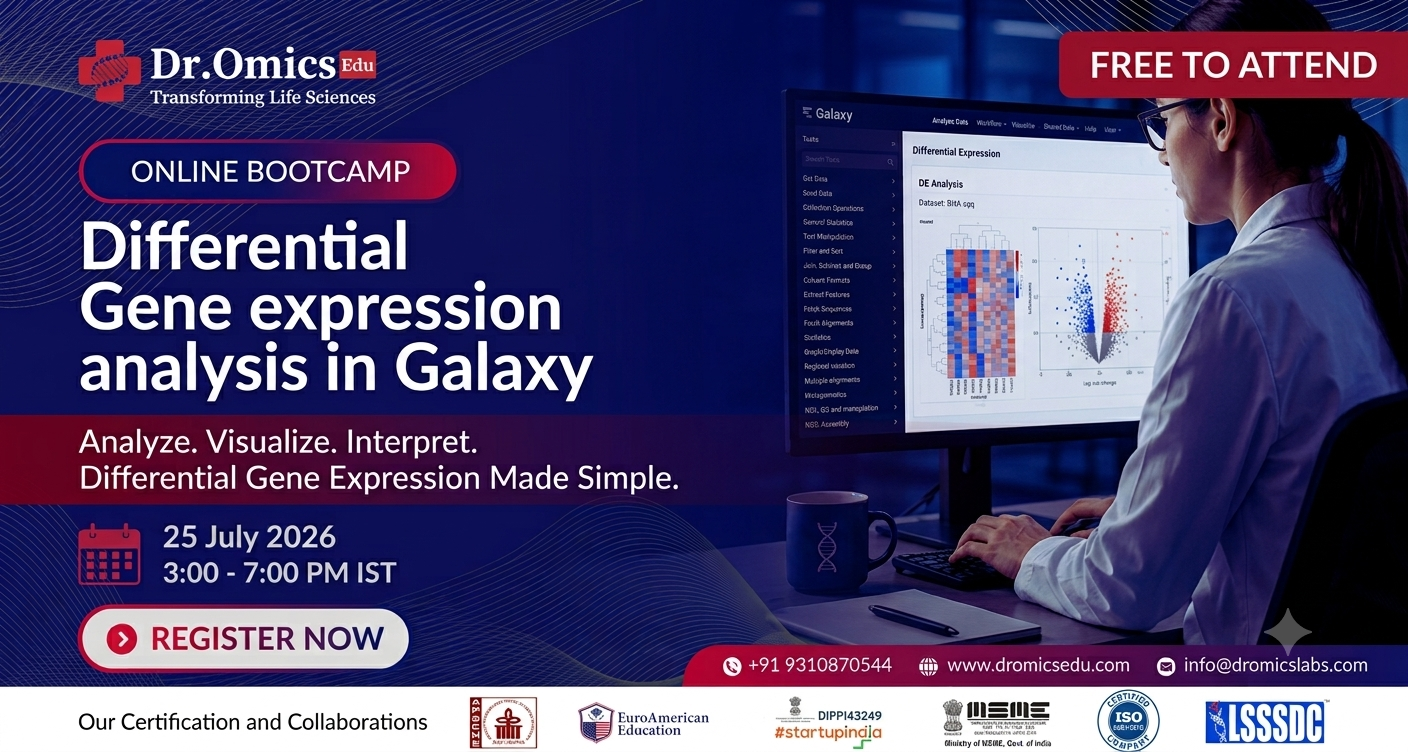
Master web-based transcriptomics and RNA-seq analytics without writing a single line of code. Learn to analyze, visualize, and interpret high-throughput differential gene expression data in Galaxy.
- 5.0/5
- English
- Starts 25 Jul 2026
- Updated Aug 2026
₹399
$10
Indian learners pay in INR; international learners are billed in USD.
Paying from outside India? Use this link to complete your payment.
About this course
This intensive online bootcamp by Dr. Omics Edu simplifies the complexities of transcriptomics data analysis using the open-source, web-based Galaxy platform. Designed for life scientists, this course removes the barrier of command-line programming, allowing you to focus entirely on biological discoveries. Participants will learn how to navigate RNA-seq pipelines, evaluate sequencing quality control, and perform robust differential gene expression analysis. The training emphasizes key visual interpretation methods, including generating publication-ready heatmaps and volcano plots directly within the software. By understanding how to transition from raw sequencing reads to clear fold-change insights, you will gain a strong grasp of data-driven molecular biology. This project-centric format ensures that researchers can confidently handle transcriptomic workflows independently. Ultimately, this bootcamp provides the core analytic foundations required to feed clean expression data into downstream functional annotation and AI modeling pipelines.
What you will learn
Skills you will gain
Certification
Available
Issued by Dr. Omics EduCourse curriculum
1 moduleWhat you need to start
- A foundational understanding of molecular biology, genetics, or central dogma concepts.
- No prior coding, Linux command line, or programming experience is required.
Who this course is for
- Life Science & Biotech Researchers: Scientists aiming to analyze their own lab's RNA-seq and transcriptomic data.
- Medical & Clinical Professionals: Healthcare innovators studying molecular biomarkers and altered gene pathways in diseases.
- Students & Academics: B.Sc., M.Sc., and Ph.D. candidates looking to add high-demand bioinformatics credentials to their CV.
- No-Code Bioinformaticians: Data enthusiasts who want to master advanced sequencing data pipelines without complex coding barriers.
