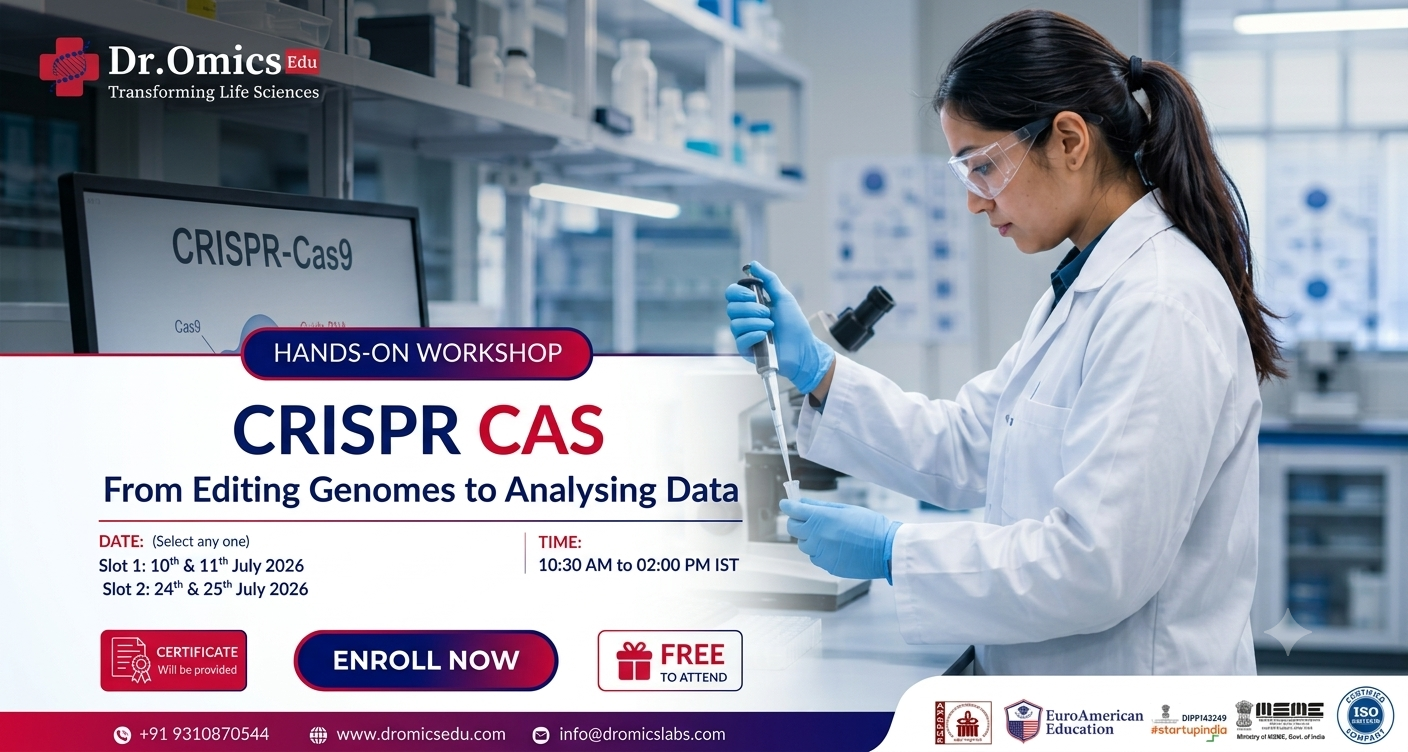
CRISPR CAS Hands-On Workshop for University Students
Unlock the power of gene editing through practical bioinformatics and hands-on computational workflows. Master molecular data analysis and CRISPR-Cas9 design strategies for modern life science research.
- 5.0/5
- English
- Updated Sep 2026
₹599
$5
Indian learners pay in INR; international learners are billed in USD.
Paying from outside India? Use this link to complete your payment.
About this course
This comprehensive hands-on workshop bridges the gap between molecular gene editing and advanced biological data analysis. Participants will dive deep into the mechanics of the CRISPR-Cas system, transitioning smoothly from foundational genome editing concepts to complex computational workflows. The curriculum is specifically designed to address real-world challenges in guide RNA (gRNA) design, off-target minimization, and next-generation sequencing (NGS) data evaluation. By blending theoretical life science insights with intensive practical sessions, this course empowers researchers to confidently navigate the digital pipeline of genetic engineering. Whether you are analyzing experimental CRISPR screen data or predicting cleavage efficiencies using AI-driven bioinformatics tools, this workshop provides the essential technical expertise. Elevate your research capabilities, master data-driven biotechnology workflows, and gain a competitive edge in the rapidly evolving genomics landscape.
What you will learn
Skills you will gain
Certification
Available
Issued by Dr. Omics EduCourse curriculum
1 moduleWhat you need to start
- Fundamental understanding of molecular biology concepts (DNA replication, transcription, translation).
- Basic familiarity with using web-based biological databases or scientific browsers is helpful but not mandatory.
Who this course is for
- Life science students, researchers, and PhD scholars seeking practical bioinformatics skills.
- Biotechnologists and molecular biologists aiming to transition from wet-lab to data-driven genomics.
- Industry professionals in pharma and biotech looking to update their gene-editing knowledge base.
