BioJourney: Your Roadmap to Bioinformatics Career Success
Navigate the rapidly growing computational biology sector with a definitive roadmap to landing high-impact jobs. Learn how to integrate AI technologies and high-throughput data skill sets to accelerate your life sciences career.
- 4.5/5
- English
- Updated Sep 2026
₹199
$5
Indian learners pay in INR; international learners are billed in USD.
Paying from outside India? Use this link to complete your payment.
About this course
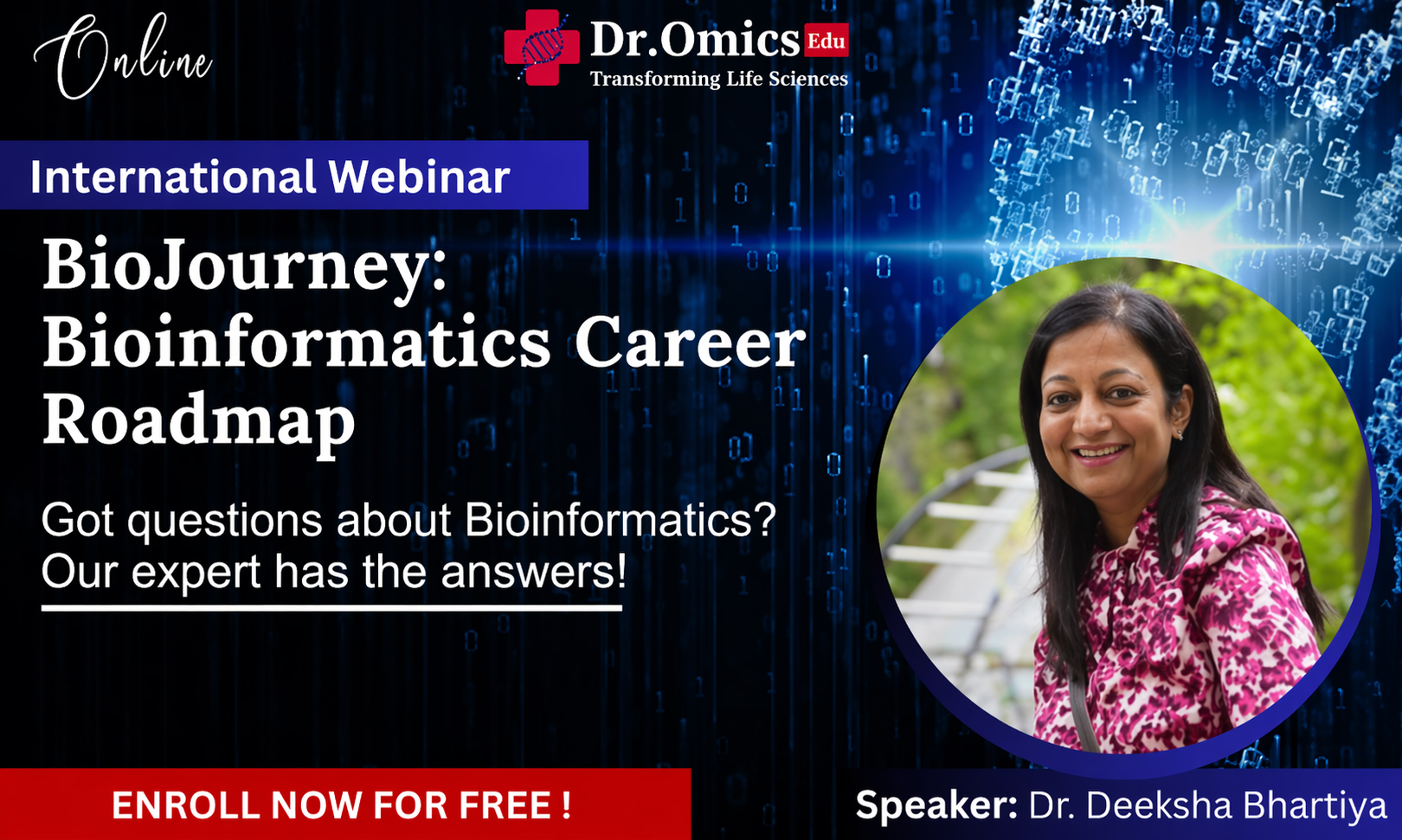
In the fast-evolving landscape of biotechnology and genomics, establishing a structured career path requires an understanding of both traditional science and modern digital tools. This career-oriented international webinar presented by Dr. Omics Edu provides a clear master roadmap for navigating the bioinformatics professional ecosystem. Led by industry expert Dr. Deeksha Bhartiya, the session directly addresses critical entry barriers and industrial demands. Participants will explore how computational data analytics, machine learning, and multi-omics are transforming pharmaceutical research and clinical diagnostics. The webinar breaks down essential technical portfolios, certifications, and structural skill components needed to secure competitive roles in global tech-bio sectors. By addressing common educational bottlenecks, this training guides life science professionals on how to effectively bridge the gap between academic theory and technical market readiness. Ultimately, attendees will walk away with actionable insights to future-proof their profiles, optimize their job search strategies, and align their competencies with current global recruitment trends.
What you will learn
Skills you will gain
Certification
Available
Issued by Dr. Omics EduCourse curriculum
1 moduleWhat you need to start
- A basic fundamental interest in life sciences, biotechnology, or computational biology applications.
- No prior command-line programming, software engineering, or mathematical scripting background is necessary.
Who this course is for
- Life Science Students & Fresh Graduates: Looking to transition smoothly into data-driven industry roles rather than traditional lab benches.
- Academic Researchers & Ph.D. Candidates: Seeking to translate their computational biology findings into commercial biotechnology careers.
- Software Engineers & Data Scientists: Eager to pivot their analytical backgrounds into high-growth health informatics and precision genomics domains.
- Biotech Professionals: Striving to upgrade their operational technical skills to meet current AI-driven research standards.
