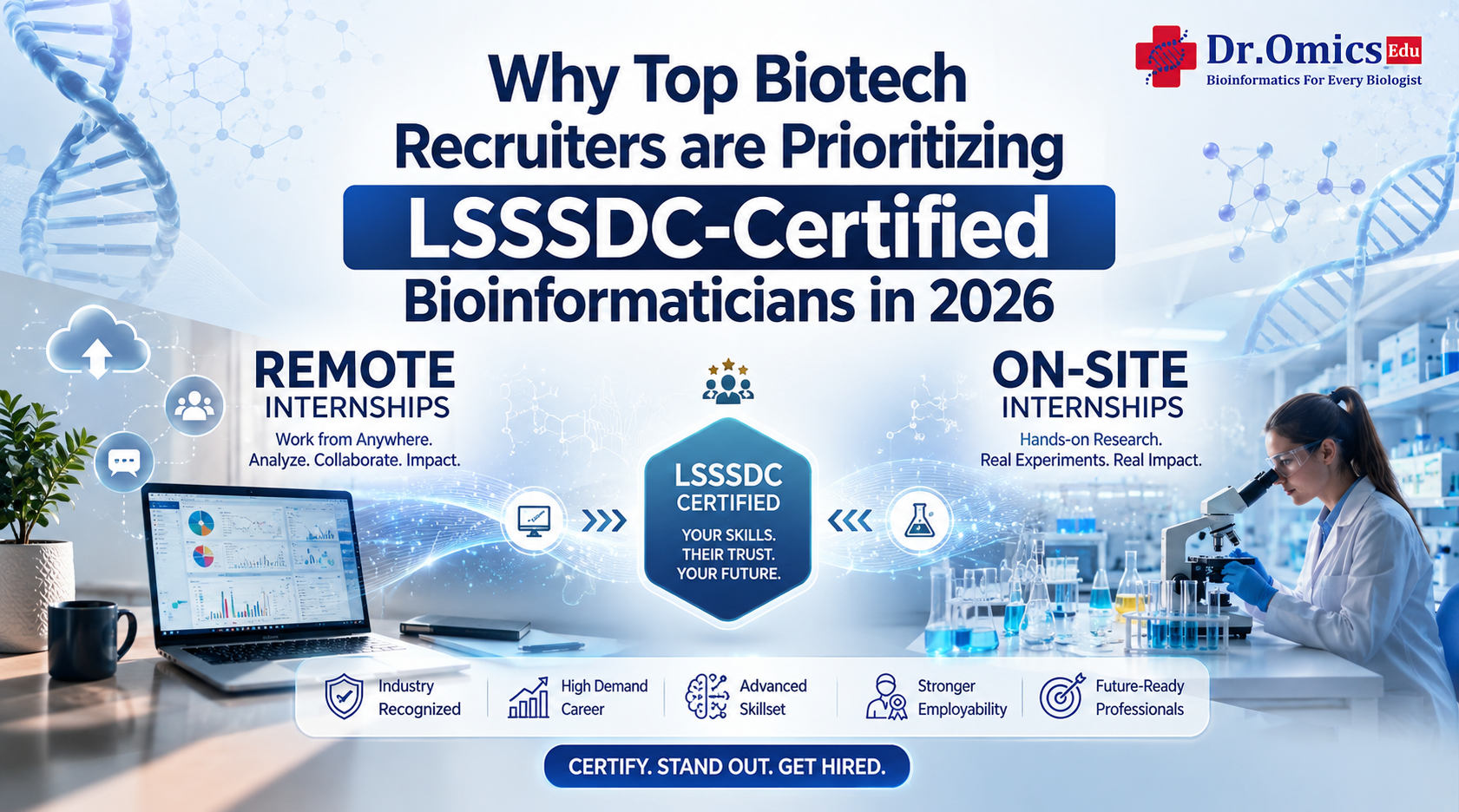
Why Top Biotech Recruiters are Prioritizing LSSSDC-Certified Bioinformaticians in 2026
Dr. Omics Edu Team · · Updated
The biotechnology industry is entering a new era driven by genomics, artificial intelligence (AI), precision medicine, and high-throughput sequencing technologies. As organizations generate enormous volumes of biological data, the need for professionals capable of analyzing, interpreting, and translating this information into meaningful insights has grown significantly. Reflecting the latest biotech hiring trends 2026, recruiters are no longer evaluating candidates solely on academic qualifications. Instead, they are actively seeking professionals with industry-recognized certifications and hands-on technical expertise that can deliver immediate value.
One credential gaining widespread attention is the Life Sciences Sector Skill Development Council (LSSSDC) certification. Established under the Ministry of Skill Development and Entrepreneurship (MSDE), Government of India, LSSSDC develops industry-aligned occupational standards and competency-based training for the life sciences sector. Its certification validates practical skills that are directly relevant to modern biotechnology, making certified bioinformaticians highly attractive to employers operating in genomics, pharmaceuticals, healthcare, diagnostics, and biotechnology research.
Why Recruiters Prefer LSSSDC-Certified Professionals
Recruitment in biotechnology has become increasingly skills-driven. Employers need professionals who can confidently handle bioinformatics tools, genomic databases, computational workflows, and biological data analysis from their first day on the job. This is where LSSSDC certification for recruiters serves as a trusted indicator of technical competence.
Unlike traditional academic programs that often emphasize theoretical concepts, LSSSDC certification focuses on practical application, standardized competency assessment, laboratory best practices, and industry-relevant workflows. Recruiters recognize that certified candidates require shorter onboarding periods, adapt more quickly to project requirements, and contribute efficiently to multidisciplinary research teams. As hiring timelines become shorter and competition for talent increases, certifications offer employers greater confidence in selecting qualified candidates.
Skilled Bioinformatics Talent Is Fueling Industry Growth
The rapid adoption of precision medicine, molecular diagnostics, agricultural biotechnology, and computational drug discovery continues to accelerate bioinformatics industry growth. Modern research laboratories and pharmaceutical companies increasingly depend on skilled bioinformatics talent to transform complex sequencing datasets into actionable biological insights.
Bioinformaticians now play critical roles in identifying disease biomarkers, supporting vaccine development, studying genetic disorders, analyzing microbial genomes, and enabling personalized treatment strategies. As biotechnology companies expand their digital capabilities, professionals with expertise in computational biology have become essential contributors across research, development, and clinical operations.
This growing reliance on biological data analysis has created numerous career opportunities across pharmaceutical companies, contract research organizations (CROs), diagnostic laboratories, academic research institutes, healthcare organizations, and biotechnology startups.
Genomics Job Market Continues to Expand
The genomics job market is experiencing sustained growth due to declining sequencing costs, increased adoption of genomic testing, and rising investments in precision healthcare. Organizations require specialists who can manage genomic pipelines, interpret sequencing results, and support evidence-based clinical decision-making.
Recruiters increasingly seek candidates with expertise in:
- Next-Generation Sequencing (NGS) data analysis
- Genomic variant identification and interpretation
- Python and R programming for biological data
- Biological database management
- Statistical genomics
- Machine learning applications in biology
- Cloud-based bioinformatics workflows
- Clinical genomics and precision medicine
These technical capabilities allow organizations to accelerate research, improve diagnostic accuracy, and enhance therapeutic development.
NGS Skills Are Among the Most In-Demand Competencies
Among current recruitment priorities, NGS skills in demand remain one of the strongest hiring drivers in biotechnology. Next-Generation Sequencing has transformed genomics research by enabling rapid, accurate, and cost-effective sequencing of DNA and RNA. However, the enormous datasets generated through NGS require specialized computational expertise for quality control, sequence alignment, variant calling, annotation, and biological interpretation.
Recruiters therefore prioritize candidates who possess practical experience with NGS analysis pipelines and bioinformatics software. Professionals capable of integrating laboratory knowledge with computational analysis are increasingly viewed as valuable assets in research and clinical settings.
Clinical Bioinformatics Is Reshaping Healthcare
The growing importance of clinical bioinformatics is further strengthening demand for certified professionals. Hospitals, molecular diagnostic laboratories, and precision medicine centers now rely on bioinformaticians to convert genomic information into clinically relevant insights that guide disease diagnosis, treatment selection, and patient care.
As genomic medicine becomes more integrated into routine healthcare, bioinformaticians with validated technical competencies and standardized industry training will continue to play a central role in multidisciplinary clinical teams.
Conclusion
The biotechnology workforce is becoming increasingly data-driven, making practical expertise and verified competencies more valuable than ever before. According to emerging biotech hiring trends 2026, employers are prioritizing professionals who combine strong computational knowledge with hands-on industry skills. LSSSDC certification provides recruiters with confidence that candidates possess standardized, job-ready competencies aligned with current industry expectations.
For aspiring bioinformaticians, earning an LSSSDC certification is more than an additional qualification—it is a strategic career investment that enhances employability, demonstrates technical proficiency, and positions professionals for success in the rapidly evolving fields of genomics, Next-Generation Sequencing, and clinical bioinformatics.
