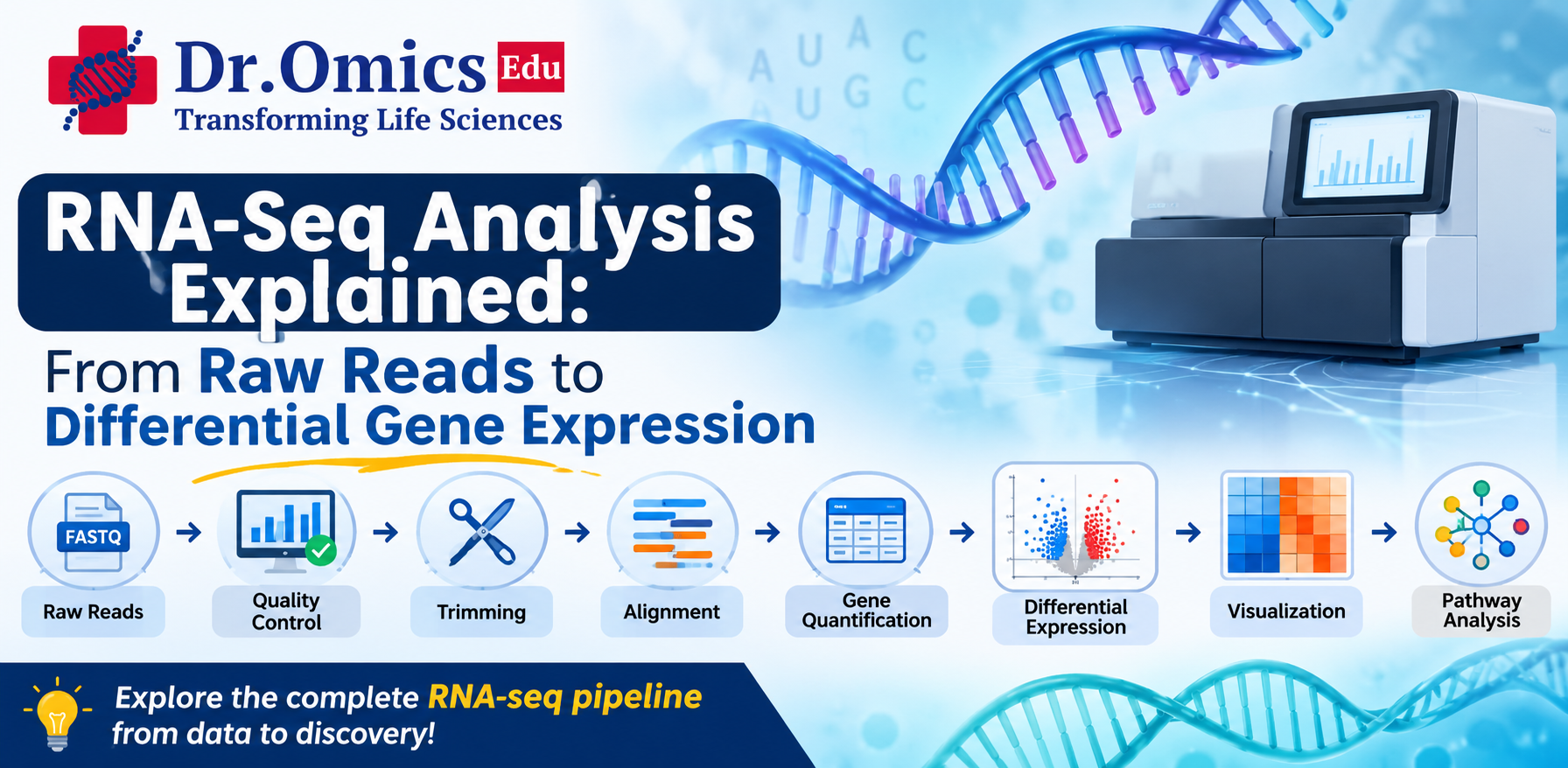
RNA-Seq Analysis Explained: From Raw Reads to Differential Gene Expression
Dr. Omics Edu Team · · Updated
Introduction
RNA sequencing (RNA-seq) is a powerful next-generation sequencing technique used to study gene expression and understand how genes behave under different biological conditions.
From identifying disease-associated genes to studying drug responses, RNA-seq plays an important role in modern genomics research.
In this blog, let's explore the RNA-seq analysis pipeline, from raw sequencing reads to differential gene expression analysis.
Steps Involved in RNA-Seq Analysis
1. Raw Data Acquisition
RNA-seq data is generally obtained in FASTQ format from sequencing platforms or public databases such as NCBI SRA.
2. Quality Control
Tools like FastQC help assess read quality, GC content, adapter contamination, and sequence duplication.
3. Quality Trimming
Tools such as fastp and Trimmomatic remove adapter sequences and low-quality bases.
4. Read Alignment
HISAT2 and STAR are commonly used to map sequencing reads against a reference genome.
5. Gene Expression Quantification
Tools like featureCounts and HTSeq calculate read counts for individual genes and generate a gene count matrix.
6. Differential Expression Analysis
DESeq2, edgeR, and limma-voom help identify significantly upregulated and downregulated genes between experimental conditions.
7. Data Visualization
Volcano plots, heatmaps, PCA plots, and MA plots help visualize gene expression patterns.
8. Functional Enrichment Analysis
GO and KEGG pathway analysis help researchers understand the biological significance of differentially expressed genes.
Complete RNA-Seq Workflow
FASTQ → FastQC → fastp → HISAT2 / STAR → featureCounts → DESeq2 / edgeR → Volcano Plot → Heatmap → GO / KEGG Analysis
Applications of RNA-Seq Analysis
- Cancer and disease research.
- Drug discovery and development.
- Biomarker identification.
- Gene expression profiling.
- Plant transcriptomics.
- Functional genomics research.
Learn RNA-Seq Analysis with Practical Training
Learning the complete RNA-seq analysis pipeline is essential for students, researchers, and life science professionals interested in bioinformatics.
Explore practical RNA sequencing bioinformatics through a structured transcriptomics course at Dr. Omics Labs and develop the skills required to analyze real-world NGS datasets.
Conclusion
RNA-seq analysis transforms millions of raw sequencing reads into meaningful biological information. Understanding each step, from quality control to differential expression analysis, provides a strong foundation in transcriptomics and bioinformatics.
