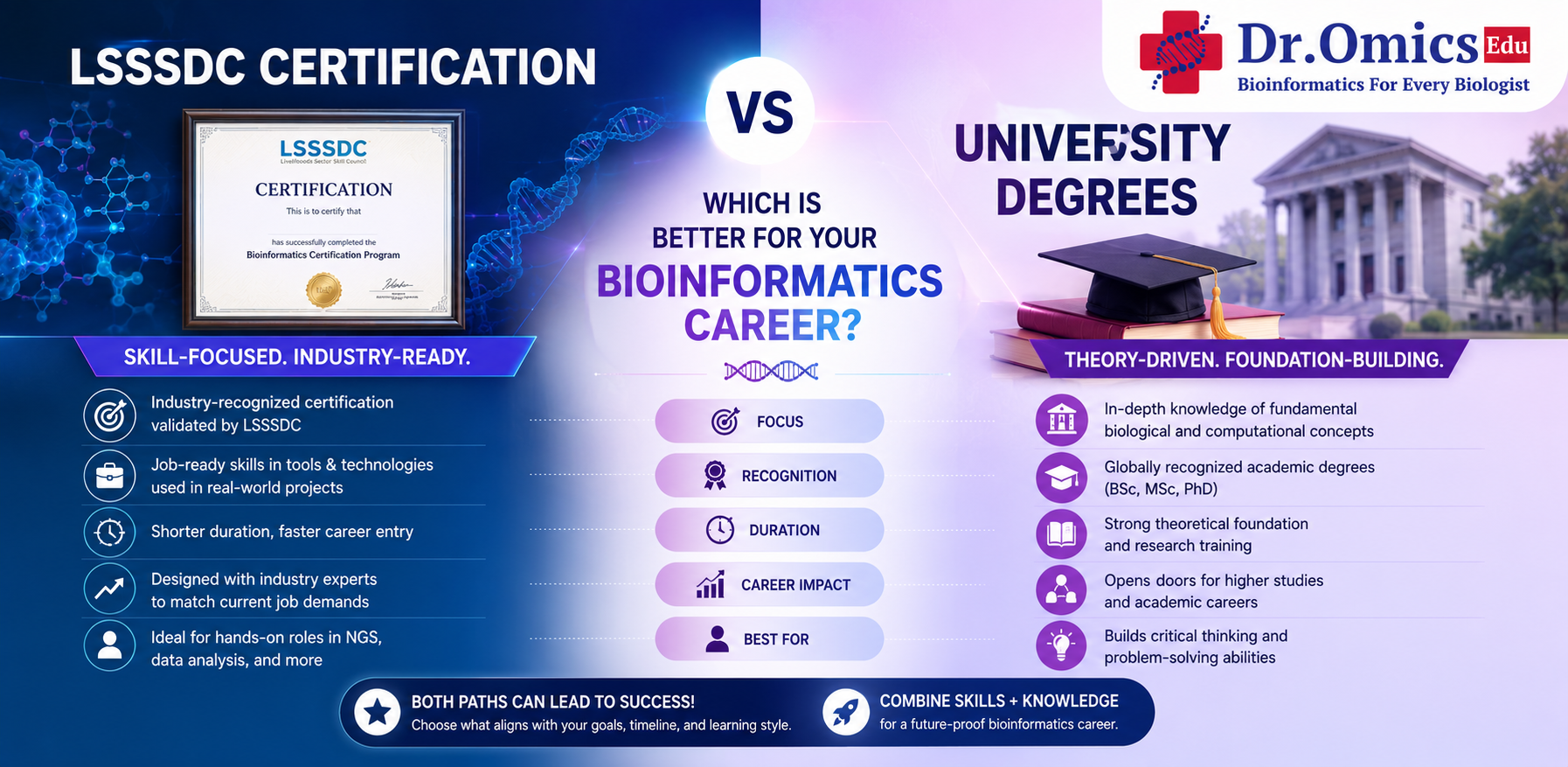
LSSSDC Certification vs. University Degrees: Which is Better for Your Bioinformatics Career?
Dr. Omics Edu Team ·
As the demand for skilled bioinformatics professionals continues to grow, many students and working professionals face a common question: Should I pursue an LSSSDC certification or a university degree?
The answer depends on your career goals, learning timeline, and industry requirements.
Understanding the Difference
A university degree, such as an MSc in Bioinformatics, provides in-depth theoretical knowledge, research exposure, and academic credentials. In contrast, LSSSDC programs focus on industry-aligned bioinformatics training, emphasizing practical skills that employers actively seek.
When comparing LSSSDC vs MSc Bioinformatics, degrees offer broader academic learning, while certifications are designed to make candidates job-ready in a shorter time frame.
Is LSSSDC Certification Recognized?
A common question among students is: "Is LSSSDC certification recognized by biotech companies?"
Since LSSSDC operates under a government-supported skill development framework, its certifications are gaining recognition among organizations looking for candidates with hands-on technical expertise. The LSSSDC Bioinformatics Analyst Certification value lies in its practical approach to training, covering tools, workflows, and real-world applications used in the biotech industry.
Certification vs Degree: Which Helps You Get a Job Faster?
For individuals seeking a fast-track bioinformatics career path, certification programs often provide quicker entry into industry roles by focusing on job-oriented skills such as Linux, NGS analysis, Python, R, and workflow management.
University degrees, on the other hand, may be better suited for students interested in research, higher education, or academic careers.
Comparing the Curriculum
A key difference in the comparison of LSSSDC and university bioinformatics syllabus is the learning approach:
- University Programs: Strong focus on theory, research methodologies, and academic foundations.
- LSSSDC Programs: Emphasis on practical projects, industry tools, and employability skills.
This makes certifications particularly attractive for learners who want direct exposure to real-world bioinformatics workflows.
Government-Certified Training Benefits
Some important government-certified bioinformatics course benefits include:
- Industry-relevant skill development
- Standardized competency assessment
- Enhanced employability
- Practical project-based learning
- Recognition under national skill development initiatives
Final Thoughts
The debate around bioinformatics career growth: certificate vs degree does not have a one-size-fits-all answer. If your goal is research, academia, or advanced specialization, a university degree remains valuable. If you want industry-focused skills and a faster route into the workforce, an LSSSDC certification can be an excellent choice.
The strongest career strategy often combines both—a solid academic foundation supported by industry-recognized certifications and hands-on experience.
