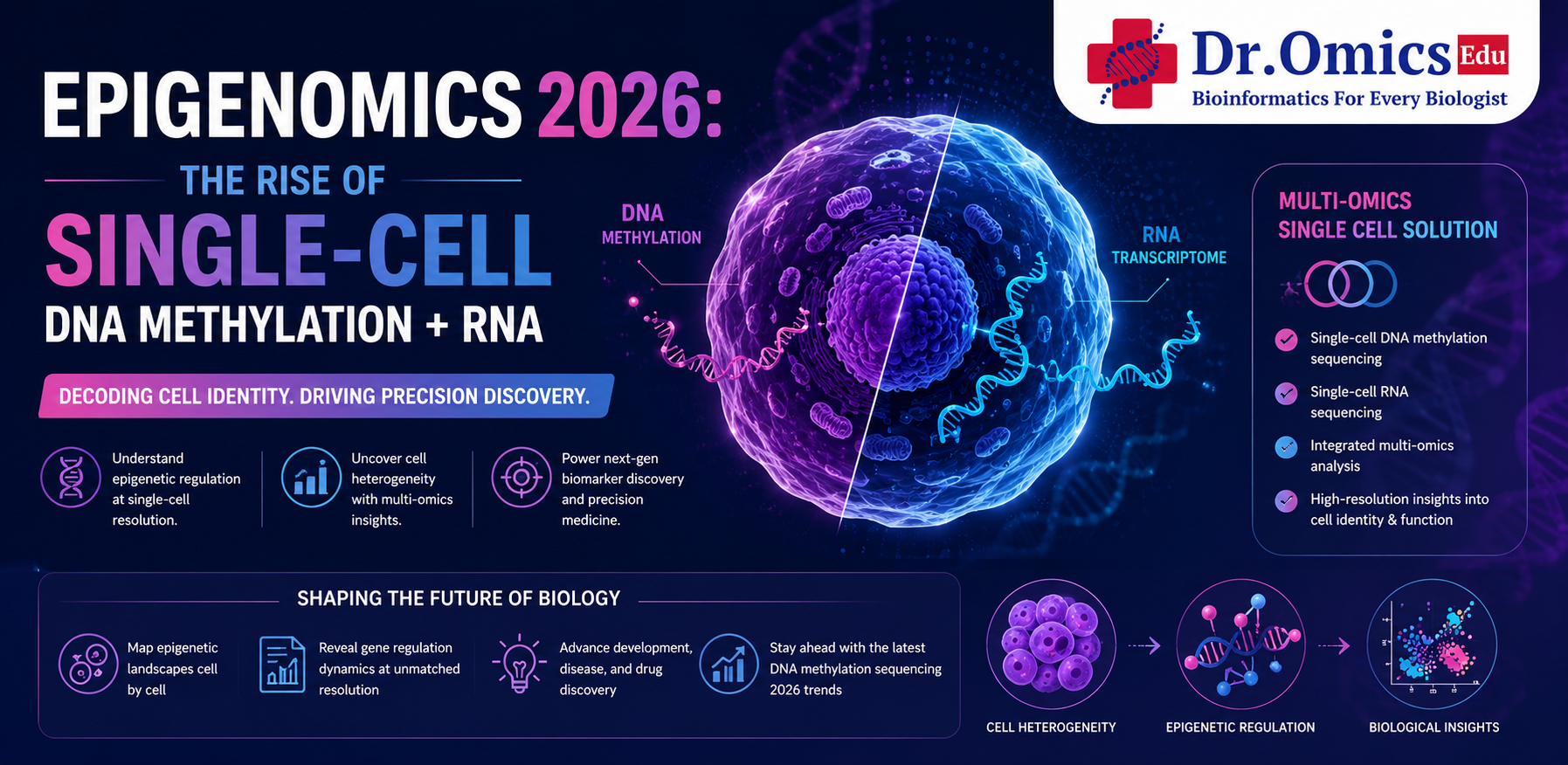
Epigenomics 2026: The Rise of Single-Cell DNA Methylation + RNA
Dr. Omics Edu Team ·
The field of epigenomics is entering a new era in 2026, driven by powerful technologies that can analyze both gene expression and epigenetic modifications at the single-cell level. Researchers are increasingly adopting multi-omics single cell solutions to gain a deeper understanding of cellular diversity, disease progression, and developmental biology.
Why Combine DNA Methylation and RNA Analysis?
Traditional sequencing methods provide valuable insights into either gene expression or epigenetic regulation. However, cells are highly dynamic, and understanding how gene activity is controlled requires studying both layers simultaneously.
With advances in DNA methylation sequencing 2026, scientists can now measure methylation patterns and transcriptomic profiles from the same individual cell. This enables researchers to identify not only which genes are active but also the epigenetic mechanisms regulating them.
A Major Trend in Precision Biology
One of the most exciting transcriptome sequencing trends is the integration of RNA sequencing with epigenetic profiling. This approach helps uncover rare cell populations, track cellular differentiation, and reveal molecular changes associated with cancer, neurological disorders, and immune diseases.
By combining multiple data types, researchers can generate a more complete picture of cellular function than ever before.
What Does This Mean for Research?
Single-cell multi-omics technologies are transforming how scientists study complex biological systems. Applications include:
- Identifying disease-specific cell populations
- Understanding gene regulation mechanisms
- Discovering new therapeutic targets
- Improving precision medicine strategies
- Mapping cellular heterogeneity with unprecedented resolution
Looking Ahead
As sequencing technologies become more accessible and computational tools continue to improve, multi-omics single cell solutions are expected to become a standard component of advanced genomics research. The combination of DNA methylation sequencing 2026 and emerging transcriptome sequencing trends is paving the way for groundbreaking discoveries in epigenetics, cancer biology, and personalized medicine.
The future of epigenomics is no longer about studying cells in bulk—it's about understanding every cell, one at a time.
