Practical 16S rRNA Metagenomics Using QIIME 2 (V3–V4 Workflow)
Mastering Microbiome Multi-Omics Data Science Pipelines via AI-Ready Computational Architecture. An End-to-End Hands-on Technical Blueprint from Raw Amplicon Reads to Advanced Taxonomy.
- 4.0/5
- English
- Updated Oct 2026
₹199
$5
Indian learners pay in INR; international learners are billed in USD.
Paying from outside India? Use this link to complete your payment.
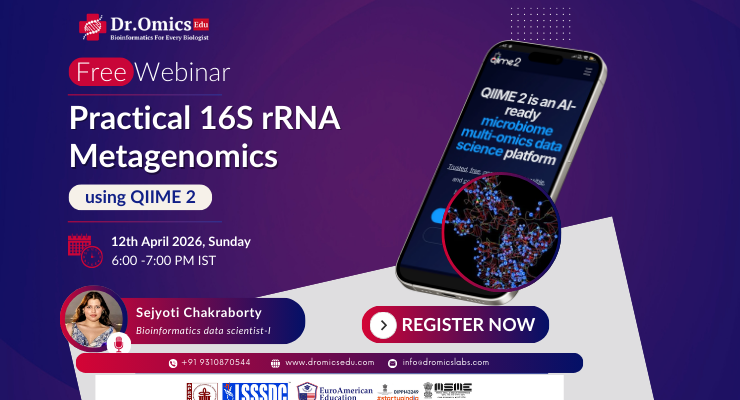
About this course
The "Practical 16S rRNA Metagenomics Using QIIME 2" free webinar is an advanced bioinformatics training program designed by Dr. Omics Edu. This high-impact digital event addresses the growing global demand for robust microbiome analysis and complex environmental genomic workflows. Participants will examine a detailed analysis pipeline focusing strictly on high-throughput sequences from the hypervariable V3–V4 structural amplicon regions. The structured curriculum focuses on deploying QIIME 2, which has emerged as an AI-ready microbiome multi-omics data science platform. Attendees will master necessary data processing steps including sequence denoising, quality filtering, and operational taxonomic clustering. Guided by experienced computational scientists, the course overcomes common research bottlenecks associated with computing microbial abundance matrices. Key topics also highlight how artificial intelligence integration optimizes taxonomic classification against reference databases like SILVA and Greengenes. Ultimately, this educational program provides life science researchers with the exact roadmap required to convert big biological sequencing data into deep publication-ready ecological insights.
What you will learn
Skills you will gain
Certification
Available
Issued by Dr. Omics EduCourse curriculum
1 moduleWhat you need to start
- Fundamental knowledge of general molecular biology, genetics, or microbial ecosystems.
- Basic familiarity with computer-driven research workflows, dataset handling, or general computational sciences.
- No prior software development experience, shell scripting, or command-line terminal mastery is strictly required.
Who this course is for
- This specialized metagenomics training is highly curated for microbiologists, bioinformatics data scientists, clinical research pathologists, computational environmental biologists, pharmaceutical developers, and advanced life science postgraduate students seeking field-ready competency in sequencing data pipelines.
