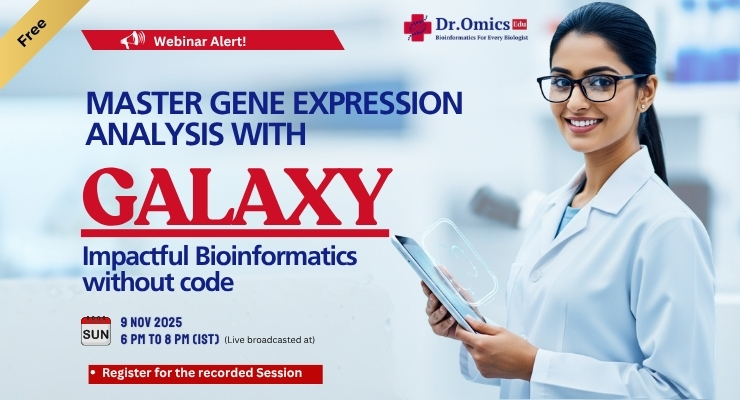
Master Gene Expression Analysis with Galaxy : From Raw Data to Insights
Unlock the power of transcriptomics using the world’s most accessible open-source cloud platform for reproducible genomic research. Transform raw sequencing reads into biological breakthroughs with automated AI-enhanced RNA-Seq pipelines and interactive visualization.
Course Description
This intensive program masterfully bridges the gap between biological theory and bioinformatics data science using the Galaxy Project ecosystem. As the industry shifts toward reproducible research, this course empowers you to perform complex RNA-Seq analysis without needing advanced command-line expertise. You will navigate the entire transcriptomics workflow, from high-throughput Quality Control (QC) to Differential Gene Expression (DGE) analysis. By leveraging AI-driven functional annotation and cloud-based computational resources, you will learn to interpret the molecular signatures of diseases and cellular responses. The curriculum focuses on real-world datasets, ensuring you can identify biomarkers and gene regulatory networks with precision. Whether you are analyzing bulk RNA-Seq or exploring the nuances of Single-Cell transcriptomics, this course provides the technical foundation to excel in the Next-Generation Sequencing (NGS) job market.
What You'll Learn
End-to-End RNA-Seq Pipelines: Master the "FastQ to Insights" journey using standardized Bioinformatics workflows.
Advanced Quality Control: Use FastQC and MultiQC to identify and fix sequencing artifacts and adapter contamination.
Transcriptome Mapping: Perform high-speed alignment using HISAT2 and STAR against reference genomes.
Statistical Modeling: Conduct rigorous differential expression testing using DESeq2 and EdgeR within the Galaxy interface.
AI-Powered Interpretation: Utilize Machine Learning algorithms for gene clustering and automated pathway enrichment via Gene Ontology (GO).
Curriculum
-
End-to-End RNA-Seq Pipelines: Master the "FastQ to Insights" journey using standardized Bioinformatics workflows.
Lesson -
Advanced Quality Control: Use FastQC and MultiQC to identify and fix sequencing artifacts and adapter contamination.
Lesson -
Transcriptome Mapping: Perform high-speed alignment using HISAT2 and STAR against reference genomes.
Lesson -
Statistical Modeling: Conduct rigorous differential expression testing using DESeq2 and EdgeR within the Galaxy interface.
Lesson -
AI-Powered Interpretation: Utilize Machine Learning algorithms for gene clustering and automated pathway enrichment via Gene Ontology (GO).
Lesson
