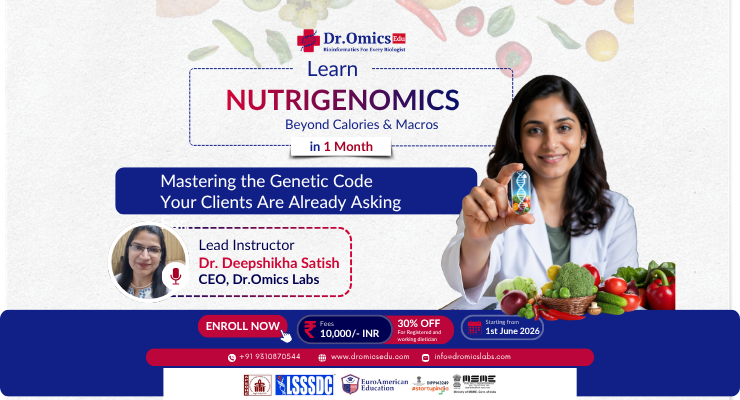
Learn Nutrigenomics: Beyond Calories & Macros, Mastering the Genetic CodeYour Clients Are Asking For
Decode DNA. Design Diets. Deliver Precision. From Genetic Variants to Actionable Meal Plans – The Future of Nutrition is Here.
- 5.0/5
- English
- Starts 01 Jul 2026
- Updated Jun 2026
About this course
This advanced, evidence-based course empowers nutrition professionals to move beyond generic calorie counting and macro ratios. You will learn how genetic variations (SNPs) influence carbohydrate sensitivity, lipid metabolism, vitamin absorption, detoxification pathways, and eating behaviors. Using real-world case studies and AI-powered genotype analysis tools, you’ll translate raw genetic data into personalized dietary interventions. The curriculum bridges molecular biology with clinical application, covering nutrigenetic testing, ethical considerations, and how to communicate results to clients without creating anxiety. By the end, you will confidently integrate DNA-driven strategies into coaching, boost client compliance, and position yourself as a leader in precision wellness. No prior genetics degree required—just curiosity and a commitment to evidence-based practice.
What you will learn
Skills you will gain
Certification
Available
Issued by Dr. OmicsCourse curriculum
3 modulesWhat you need to start
- Basic understanding of macronutrients and general nutrition principles
- No genetic or bioinformatics background required
- Willingness to work with de-identified sample genetic data (no personal DNA needed)
- Access to a computer with internet (AI tools require cloud access)
Who this course is for
- Registered Dietitians (RDs) and nutrition coaches seeking a competitive edge
- Personal trainers and wellness practitioners looking to add DNA-based services
- Health-tech enthusiasts exploring AI + genetics applications
- Students of nutrition, functional medicine, or precision health
- Clinic owners wanting to launch a nutrigenomics service line
