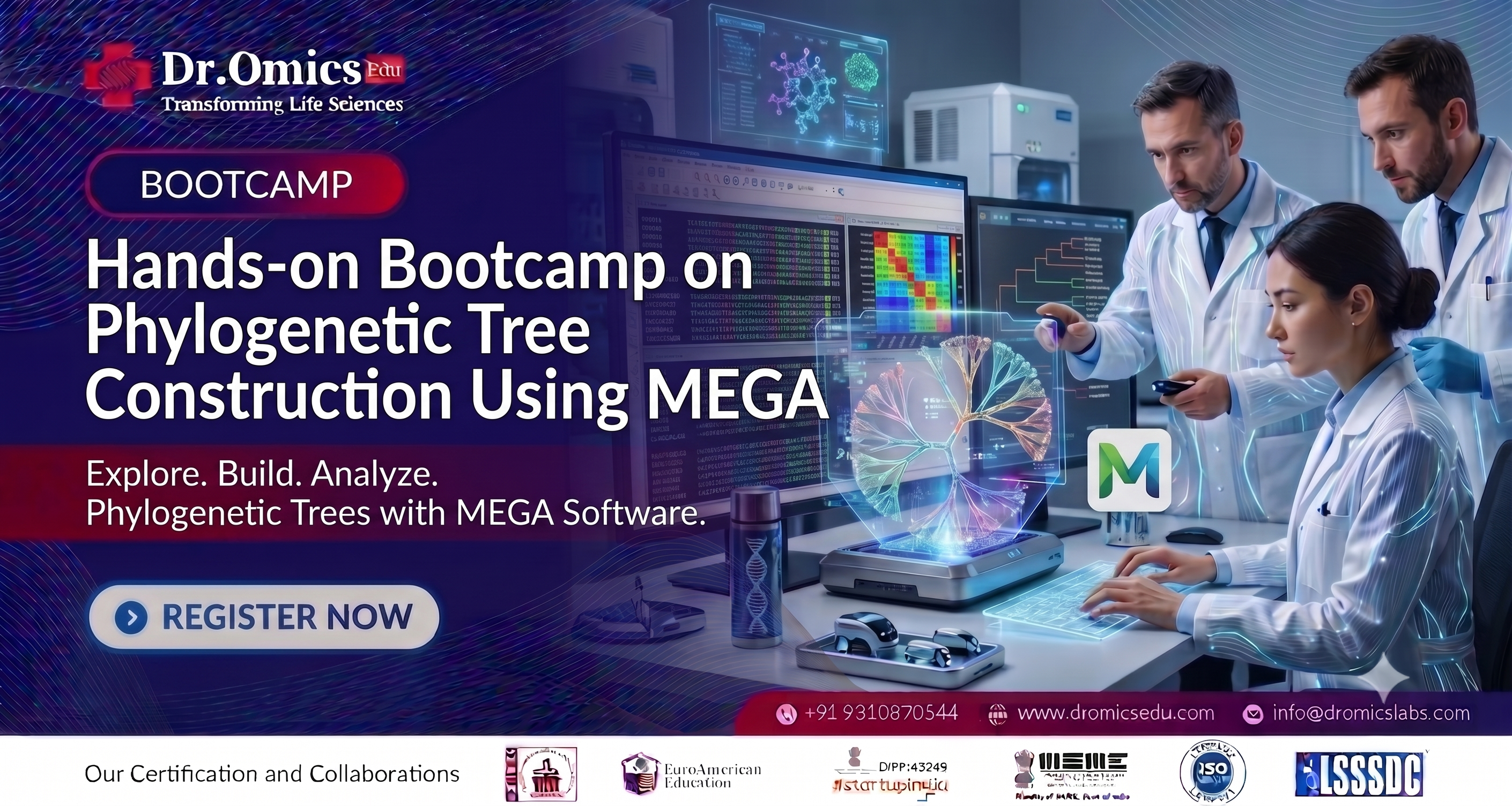
Hands-on Bootcamp on Phylogenetic Tree Construction Using MEGA
Master phylogenetic tree construction using MEGA software with real biological sequence datasets and AI-assisted evolutionary analysis. Learn sequence alignment, evolutionary models, tree-building methods, bootstrap analysis, and publication-ready phylogenetic interpretation for life science research.
- 5.0/5
- English
- Starts 22 Aug 2026
- Updated Aug 2026
₹399
$10
Indian learners pay in INR; international learners are billed in USD.
Paying from outside India? Use this link to complete your payment.
About this course
Phylogenetic tree construction is an essential skill in modern genomics, molecular biology, microbiology, biotechnology, and evolutionary research. This hands-on bootcamp teaches you how to build, analyze, and interpret phylogenetic trees using the latest version of MEGA (Molecular Evolutionary Genetics Analysis) software. Participants will work with real DNA and protein sequence datasets while learning sequence alignment, evolutionary distance estimation, model selection, and multiple tree construction methods. The course also introduces AI-assisted biological data analysis, helping learners understand how artificial intelligence complements phylogenetic research. Through practical exercises, bootstrap validation, and result interpretation, learners will gain confidence in generating publication-quality phylogenetic trees. Whether you are a student, researcher, or industry professional, this bootcamp provides practical experience aligned with current life science research and bioinformatics workflows. No prior programming knowledge is required, making it suitable for beginners as well as experienced researchers looking to strengthen their phylogenetic analysis skills.
What you will learn
Skills you will gain
Certification
Available
Issued by Dr. Omics EduCourse curriculum
1 moduleWhat you need to start
- Basic understanding of Biology or Life Sciences
- Fundamental knowledge of DNA and proteins
- Familiarity with molecular biology concepts is beneficial
- Basic computer skills
- No programming knowledge required
- No previous bioinformatics experience required
- Windows or Mac computer with internet access
- Willingness to perform practical exercises
Who this course is for
- Life Science students
- Biotechnology students
- Microbiology students
- Molecular Biology researchers
- Genetics researchers
- Bioinformatics beginners
- PhD scholars
- Faculty members
- Research scientists
- Clinical researchers
- Pharmaceutical professionals
- Genomics researchers
- Evolutionary biologists
- Biochemists
- Agricultural scientists
- Environmental scientists
- Healthcare researchers
- Anyone interested in phylogenetic analysis using MEGA
