Decoding Breast Cancer Genomics: Navigating NGS Data
From data to discovery — decode cancer with precision using advanced multi-omics pipelines. Master high-throughput next-generation sequencing analysis to identify oncology variants and biomarkers.
- 4.0/5
- English
- Updated Oct 2026
₹199
$5
Indian learners pay in INR; international learners are billed in USD.
Paying from outside India? Use this link to complete your payment.
About this course
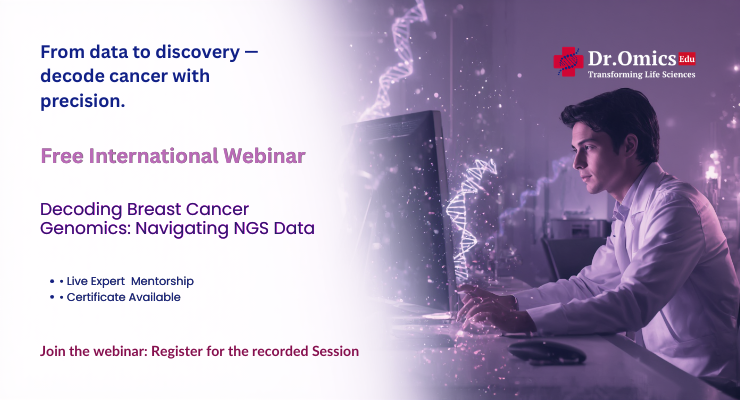
Welcome to an advanced training initiative designed to unlock the molecular complexities of oncology datasets. "Decoding Breast Cancer Genomics: Navigating NGS Data" is a free international webinar tailored to modern life science professionals. As shown in 20..png, this program emphasizes a clear pipeline: from data to discovery — decode cancer with precision. Participants will explore how artificial intelligence models and deep learning algorithms accelerate the clinical interpretation of genomic variants. Throughout this course, you will dive deep into processing next-generation sequencing (NGS) data, variant calling workflows, and oncogene identification. We will investigate mutations within specific exons, introns, and regulatory regions to understand tumor progression. Guided by live expert mentorship, you will learn to navigate complex biological databases and extract predictive biomarkers. By applying advanced bioinformatics pipelines, you will gain the specialized dry-lab capability required to contribute to modern precision oncology and personalized medicine.
What you will learn
Skills you will gain
Certification
Available
Issued by Dr. Omics EduCourse curriculum
1 moduleWhat you need to start
- A foundational understanding of molecular biology, genetics, or basic cancer cell biology concepts.
- No prior command-line, coding, or heavy Linux experience is required; complex software tools will be introduced systematically.
Who this course is for
- Cancer Researchers & Biologists: Wet-lab scientists looking to transition into dry-lab bioinformatics to analyze their own high-throughput sequencing data.
- Medical & Healthcare Professionals: Clinicians, oncologists, and genetic counselors wanting to understand the technical pipelines behind genomic diagnostic reports.
- Bioinformatics Students: Aspiring data scientists seeking specialized, project-based competency in clinical oncology datasets and transcriptomics pipelines.
