Data Driven Research: in Biology and chemistry( AI)
Bridge chemical and biological datasets using predictive machine learning algorithms. Master advanced AI-driven research workflows to accelerate global scientific discovery and innovation.
- 4.0/5
- English
- Updated Oct 2026
₹199
$5
Indian learners pay in INR; international learners are billed in USD.
Paying from outside India? Use this link to complete your payment.
About this course
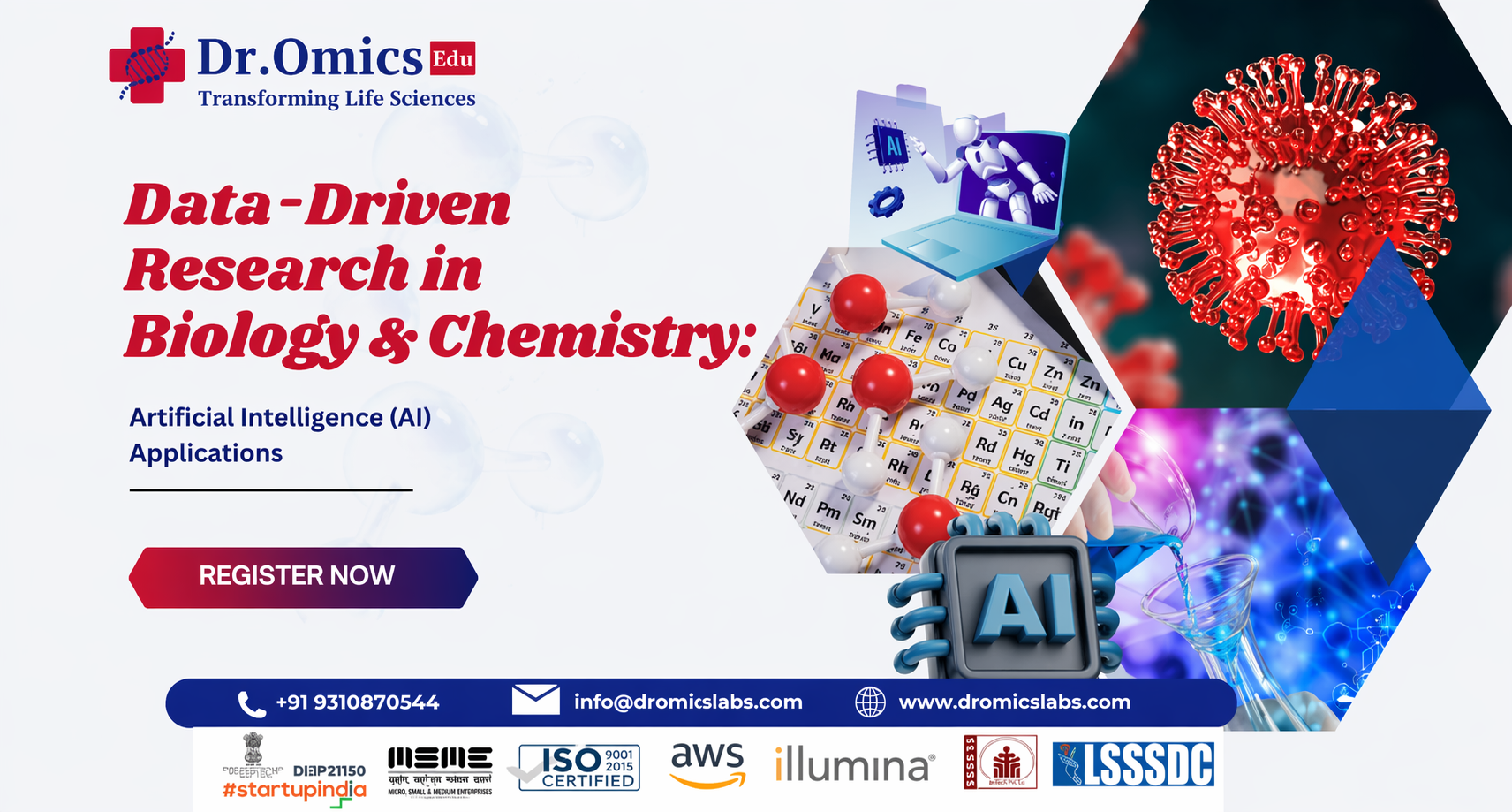
Welcome to the absolute convergence of chemical intelligence, molecular biology, and deep data science frameworks. "Data-Driven Research in Biology & Chemistry: Artificial Intelligence (AI) Applications" is an advanced technical program presented by Dr.Omics Edu to redefine modern scientific methodologies. As highlighted in 24.png, this course is backed by trusted industry heavyweights and government certifications including Startup India, MSME, ISO, AWS, Illumina, and LSSSDC. Throughout this comprehensive training, participants will dive deep into how generative AI models handle complex multi-omics data and structural chemical datasets. You will explore automated screening workflows, algorithmic target identification, and predictive molecular analytics that bypass traditional wet-lab limitations. Our structured approach ensures you learn to decode complex chemical spaces and biological signaling pathways using practical software tools. By replacing slow, manual trial-and-error with high-performance computational modeling, this curriculum delivers the exact analytics capabilities required by elite modern laboratories. Ultimately, you will finish this course equipped with a definitive data-driven roadmap to lead high-growth biotechnology, pharmacy, and life science innovation initiatives globally.
What you will learn
Skills you will gain
Certification
Available
Issued by Dr. Omics EduCourse curriculum
1 moduleWhat you need to start
- A basic background or educational foundation in any domain of chemistry, biology, pharmacy, or computer science.
- Prior programming experience is not mandatory; all foundational data-driven tools and AI concepts are taught step-by-step.
Who this course is for
- Chemical & Biological Researchers: Wet-lab chemists, biochemists, and microbiologists seeking to transition into dry-lab AI research techniques.
- Data Scientists & Software Developers: Coding professionals wanting to specialize their machine learning talents toward pharma and healthcare sectors.
- Postgraduate Scholars & Academics: Master’s or PhD candidates looking to publish data-rich, computationally validated research papers.
