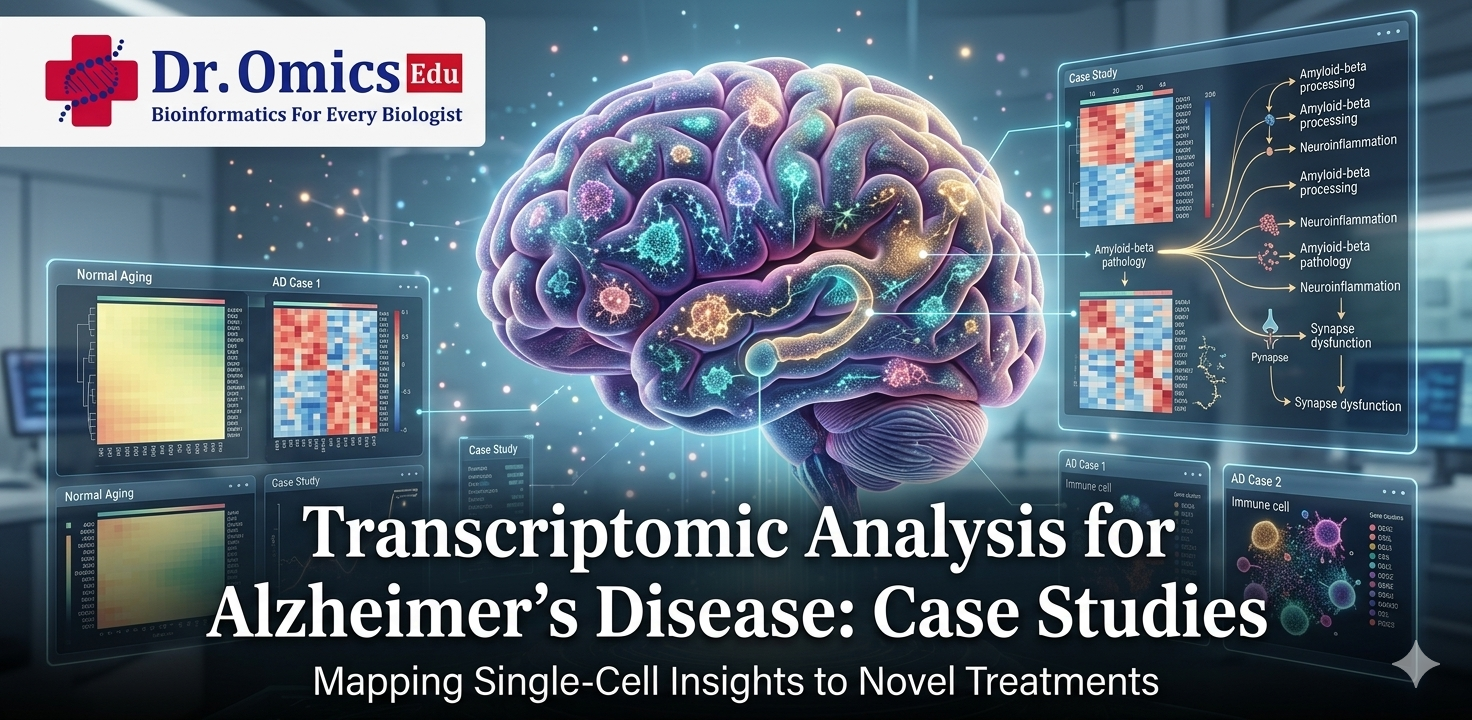
Transcriptomic Analysis for Alzheimer’s Disease: Case Studies
Dr. Omics Edu Team ·
Alzheimer’s disease (AD) is a progressive neurodegenerative disorder that affects memory, cognition, and daily functioning. Despite decades of research, the molecular mechanisms driving disease progression remain incompletely understood. Advances in transcriptomics and RNA sequencing technologies are helping researchers uncover the gene expression changes associated with Alzheimer's disease, providing valuable insights into disease biology and potential therapeutic targets.
One of the most powerful approaches in this field is RNA-seq in neurodegeneration. RNA sequencing enables scientists to analyze the complete transcriptome and identify genes that are activated or suppressed during disease progression. These findings help bridge the gap between genetic risk factors and the cellular processes responsible for neuronal dysfunction.
Case Study: Identifying Inflammatory Pathways in Alzheimer's Disease
A notable transcriptomic study analyzed postmortem brain samples from Alzheimer's patients and healthy controls using RNA-Seq technology. Researchers discovered significant upregulation of genes associated with microglial activation and immune signaling pathways.
The study revealed that chronic neuroinflammation may play a central role in disease progression. Several inflammation-related genes showed consistently elevated expression levels in affected brain regions, suggesting that immune dysregulation contributes to neuronal damage and cognitive decline.
These findings demonstrate how RNA-seq in neurodegeneration can help uncover disease mechanisms that may not be visible through traditional genetic studies alone. Such discoveries are also guiding the development of anti-inflammatory therapeutic strategies for Alzheimer's disease.
Discovering Alzheimer's Disease Biomarkers
The identification of reliable Alzheimer's disease biomarkers remains a major research priority. Transcriptomic studies have revealed distinct gene expression signatures associated with disease onset and progression.
Potential biomarker categories include:
- Neuroinflammation-related genes
- Synaptic signaling markers
- Oxidative stress response genes
- Mitochondrial dysfunction indicators
- Protein aggregation pathways
These biomarkers could support earlier diagnosis, improve patient stratification for clinical trials, and enable more effective monitoring of treatment responses.
Understanding Systemic Metabolic Dysregulation Genomics
Recent research suggests that Alzheimer's disease extends beyond the brain and may involve widespread metabolic abnormalities. The field of systemic metabolic dysregulation genomics focuses on understanding how altered metabolic pathways contribute to neurodegeneration.
Transcriptomic analyses have identified disruptions in:
- Glucose metabolism
- Lipid transport and processing
- Insulin signaling pathways
- Mitochondrial energy production
These findings indicate that metabolic dysfunction may be a significant contributor to disease progression. Understanding these systemic changes could open new opportunities for developing targeted therapies.
Why Transcriptomics Matters
RNA sequencing offers several advantages for Alzheimer's research:
- Comprehensive gene expression profiling
- Discovery of novel disease-associated pathways
- Identification of potential therapeutic targets
- Biomarker discovery for early diagnosis
- Improved understanding of disease heterogeneity
As transcriptomic datasets continue to grow, researchers are gaining a more detailed view of the molecular events underlying neurodegeneration.
Final Thoughts
Transcriptomic analysis is transforming our understanding of Alzheimer's disease by revealing critical gene expression changes associated with neurodegeneration. Through the use of RNA-seq in neurodegeneration, scientists are identifying promising Alzheimer's disease biomarkers and exploring the role of systemic metabolic dysregulation genomics in disease progression. These insights are paving the way for improved diagnostics, novel therapies, and more personalized approaches to treating neurodegenerative disorders.
