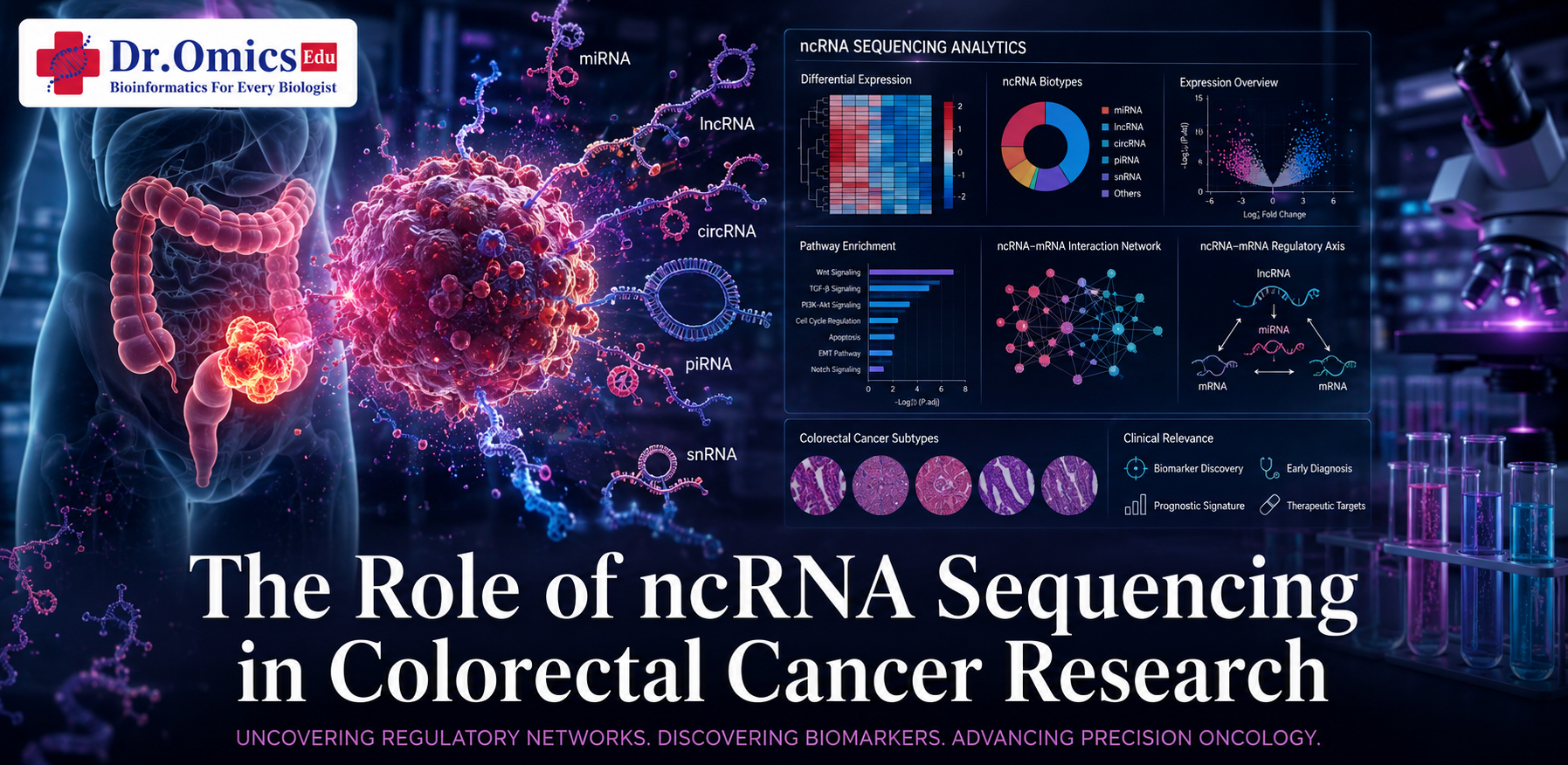
The Role of ncRNA Sequencing in Colorectal Cancer Research
Dr. Omics Edu Team ·
Colorectal cancer (CRC) remains one of the leading causes of cancer-related deaths worldwide. While significant progress has been made in understanding the genetic mutations associated with CRC, researchers are increasingly focusing on non-coding regions of the genome to uncover new mechanisms of disease development. This shift has highlighted the importance of non-coding RNA sequencing, a powerful approach for studying RNA molecules that do not encode proteins but play critical regulatory roles in cellular processes.
As advances in colorectal cancer genomics 2026 continue to reshape cancer research, non-coding RNAs (ncRNAs) are emerging as valuable tools for diagnosis, prognosis, and therapeutic development.
Why Non-Coding RNA Sequencing Matters
Although only a small portion of the human genome codes for proteins, much of the remaining genome is actively transcribed into non-coding RNAs, including microRNAs (miRNAs), long non-coding RNAs (lncRNAs), and circular RNAs (circRNAs). These molecules regulate gene expression, cell signaling, and cellular growth.
Non-coding RNA sequencing enables researchers to identify and quantify these regulatory RNAs, helping uncover molecular changes that occur during colorectal cancer development.
Key advantages include:
- Detection of novel ncRNA molecules
- Identification of dysregulated regulatory pathways
- Improved understanding of tumor biology
- Discovery of potential diagnostic and therapeutic targets
Case Study: Identifying Diagnostic Biomarkers in Colorectal Cancer
Recent transcriptomic studies have used ncRNA sequencing to compare tumor tissues with healthy colorectal tissues. Researchers identified several microRNAs and long non-coding RNAs that were significantly overexpressed in cancer samples.
One notable finding was the association of specific ncRNA expression patterns with tumor progression and metastasis. Patients with elevated levels of certain non-coding RNAs showed more aggressive disease characteristics, highlighting their potential clinical significance.
This case study demonstrates how ncRNA as cancer biomarkers can provide valuable information beyond traditional genomic analyses, supporting earlier detection and more accurate disease classification.
ncRNA as Cancer Biomarkers
The growing interest in ncRNA as cancer biomarkers stems from their stability, tissue specificity, and involvement in cancer-related pathways. Unlike many conventional biomarkers, non-coding RNAs can often be detected in blood and other body fluids, making them attractive candidates for non-invasive diagnostic tests.
Potential applications include:
- Early colorectal cancer detection
- Prognostic risk assessment
- Monitoring treatment response
- Predicting disease recurrence
- Supporting precision medicine strategies
As research progresses, ncRNA-based biomarker panels may become an important component of routine cancer diagnostics.
The Future of Colorectal Cancer Genomics
The field of colorectal cancer genomics 2026 is moving toward the integration of genomic, transcriptomic, and epigenomic data to provide a more comprehensive understanding of tumor biology. Non-coding RNA sequencing plays a central role in this evolution by revealing regulatory mechanisms that were previously overlooked.
Combining ncRNA profiles with other multi-omics datasets can help researchers identify novel therapeutic targets and develop personalized treatment approaches tailored to individual patients.
Final Thoughts
The application of non-coding RNA sequencing is transforming colorectal cancer research by uncovering critical regulatory molecules involved in tumor development and progression. Through the identification of ncRNA as cancer biomarkers, researchers are improving diagnostic accuracy and expanding opportunities for precision oncology. As advances in colorectal cancer genomics 2026 continue, ncRNA sequencing is expected to play an increasingly important role in early detection, biomarker discovery, and personalized cancer treatment.
