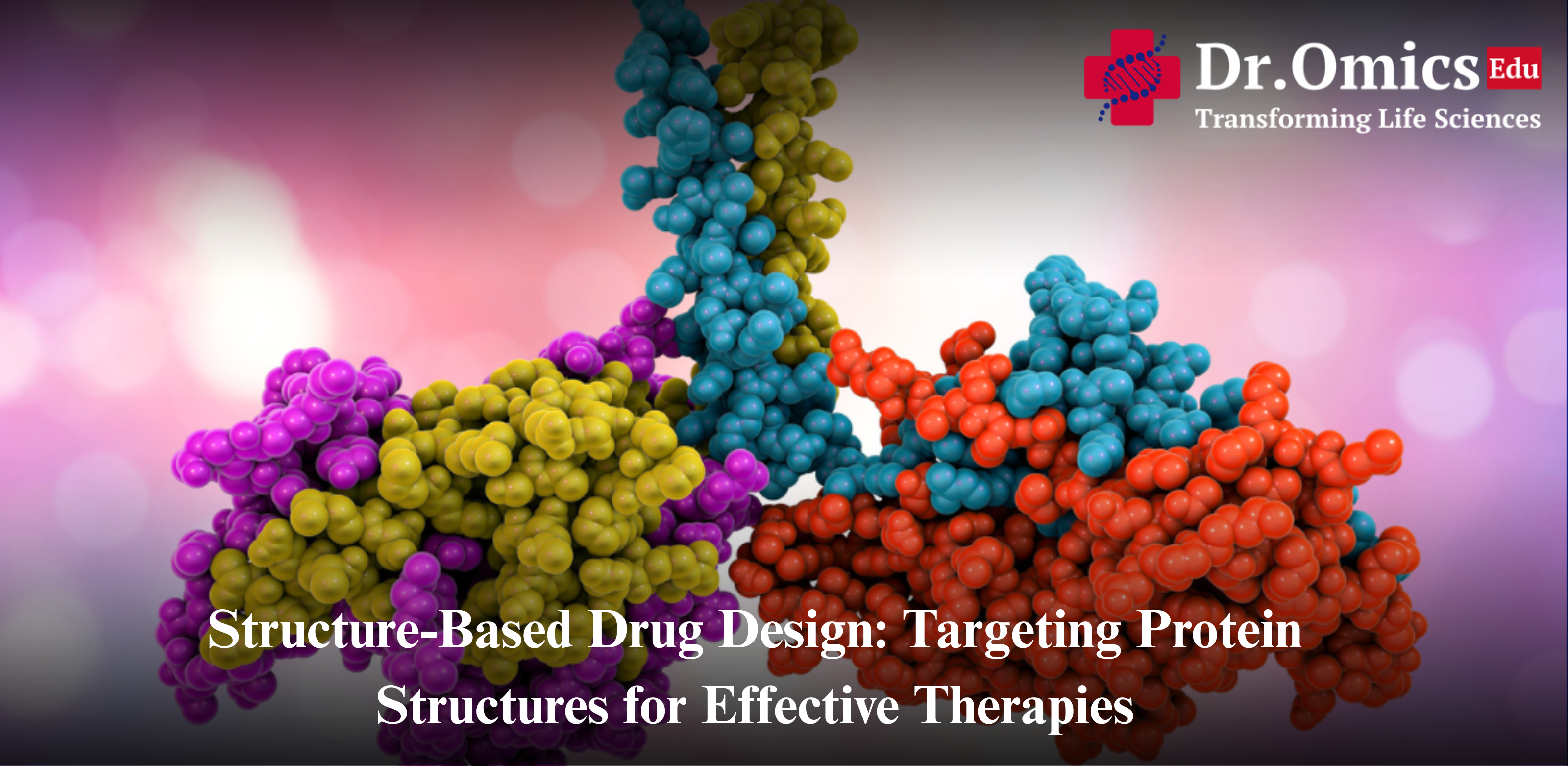
Structure-Based Drug Design: Targeting Protein Structures for Effective Therapies
Structure-Based Drug Design: Targeting Protein Structures for Effective Therapies
Key Takeaways
- Structure-based drug design (SBDD) uses 3D protein structures to design drugs with high specificity.
- Techniques like molecular docking, virtual screening, molecular dynamics, and CADD optimize lead compounds.
- SBDD accelerates drug discovery, improves precision, and supports personalized medicine.
- Integration of AI and machine learning enhances predictive accuracy and innovation in drug development.
Introduction
In modern drug discovery, structure-based drug design (SBDD) has emerged as a transformative strategy. By leveraging detailed protein structures, researchers can design molecules that specifically interact with drug targets, improving efficacy while minimizing off-target effects. This approach is particularly crucial in developing therapies for complex diseases, including cancer, neurodegenerative disorders, and infectious diseases.
SBDD integrates bioinformatics, molecular modeling, and computational chemistry, creating a rational and efficient pathway from target identification to therapeutic development.
1. Understanding Structure-Based Drug Design (SBDD)
SBDD focuses on the atomic-level architecture of biological targets, predominantly proteins. High-resolution structural data are essential and obtained through:
- X-ray Crystallography – Offers precise 3D atomic coordinates.
- Nuclear Magnetic Resonance (NMR) Spectroscopy – Reveals protein dynamics and flexibility.
- Cryo-Electron Microscopy (Cryo-EM) – Resolves large or complex proteins not amenable to crystallization.
This structural insight guides the rational design of molecules with strong binding affinity and specificity to their intended targets.
2. Key Techniques in SBDD
Molecular Docking
Predicts how small molecules bind to protein targets.
- Evaluates binding affinity and optimal ligand orientation.
- Prioritizes drug candidates for experimental validation.
Virtual Screening
High-throughput computational evaluation of chemical libraries against target proteins.
- Rapidly identifies promising lead compounds.
- Reduces experimental time and costs.
Molecular Dynamics Simulations
Simulates atomic movements and interactions.
- Explores protein flexibility and binding stability.
- Assists in understanding dynamic drug-target interactions.
Computer-Aided Drug Design (CADD)
Integrates bioinformatics and computational chemistry to predict molecular behavior.
- Optimizes compound properties.
- Enhances efficiency of lead discovery and drug optimization workflows.
3. Applications of Structure-Based Drug Design
Targeting Protein-Protein Interactions
Design inhibitors to disrupt critical biological pathways involved in disease progression.
Precision Oncology
Analyzes cancer-specific mutations to develop targeted therapies with minimal off-target effects.
Antiviral Drug Development
Designs molecules targeting viral proteins, accelerating therapeutic responses to emerging pathogens.
4. Advantages of Structure-Based Drug Design
- Enhanced Precision: Drugs designed for specific protein targets reduce side effects.
- Accelerated Discovery: Rapidly identifies lead compounds, saving time and resources.
- Supports Personalized Medicine: Enables patient-specific drug design for optimized therapeutic outcomes.
5. Challenges and Future Directions
Structural Complexity
Some proteins, especially membrane proteins, are difficult to resolve structurally.
Dynamic Protein Conformations
Proteins exhibit flexibility and conformational changes, complicating modeling and docking predictions.
AI and Machine Learning Integration
Incorporating AI-driven predictive models enhances the accuracy of molecular interaction forecasts and accelerates SBDD pipelines.
Conclusion
Structure-based drug design (SBDD) is revolutionizing modern medicine by enabling targeted, efficient, and safer therapies. Leveraging molecular docking, virtual screening, molecular dynamics, and CADD, SBDD accelerates drug discovery while improving precision. As AI and machine learning continue to integrate into SBDD workflows, the future promises faster, more accurate, and personalized therapeutics capable of addressing complex diseases with higher efficacy and safety
