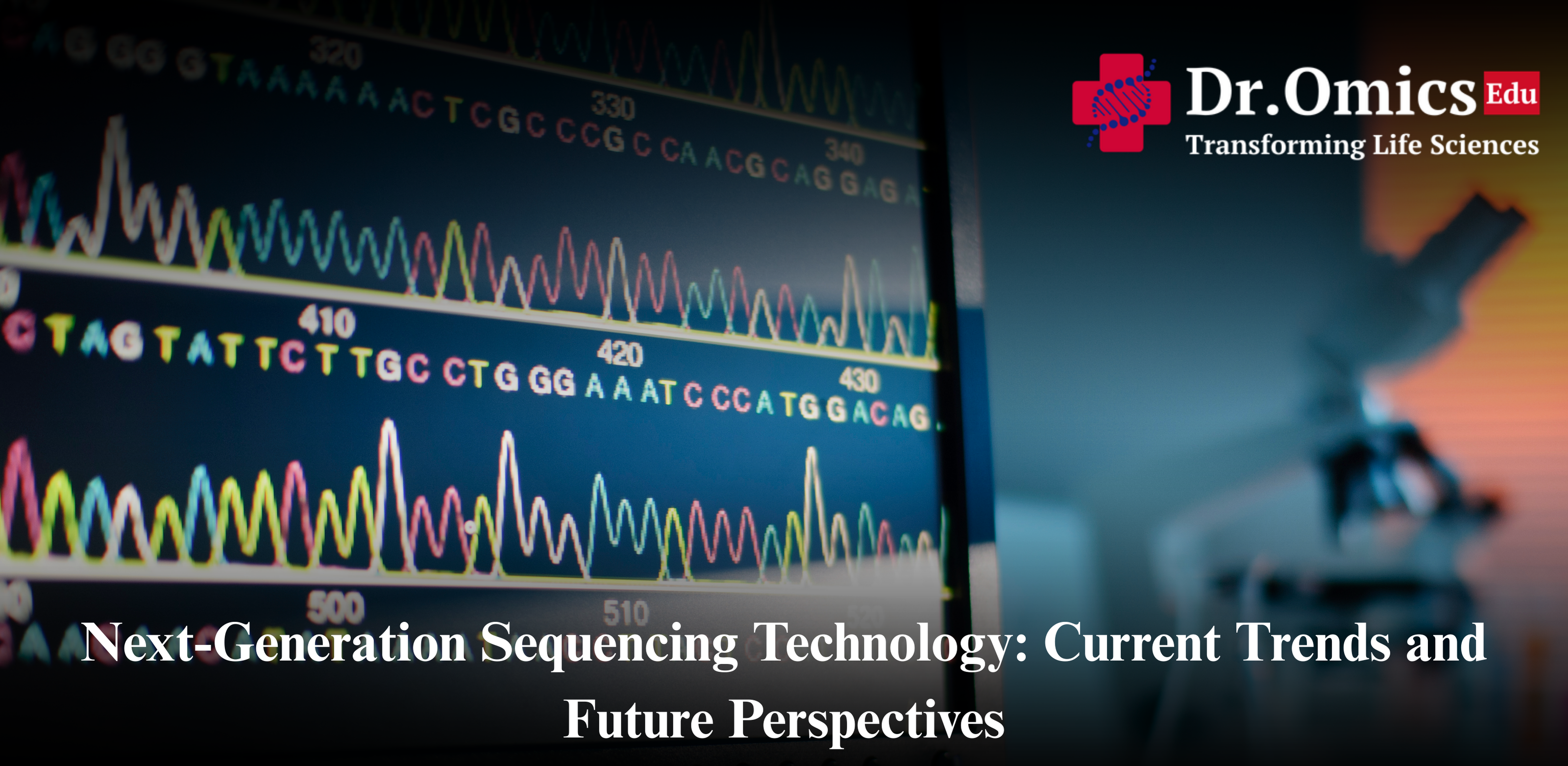
Next-Generation Sequencing Technology: Current Trends and Future Perspectives
Next-Generation Sequencing Technology: Current Trends and Future Perspectives
Next-generation sequencing (NGS) has fundamentally transformed genomic research, redefining how scientists analyse DNA and RNA at scale. Over the past two decades, NGS technology has evolved from a niche research tool into a cornerstone of modern genomics, powering discoveries in precision medicine, agriculture, and environmental science. Continuous DNA sequencing advancements, coupled with rapid progress in bioinformatics trends, are making high-throughput sequencing faster, more accurate, and increasingly accessible.
As sequencing platforms mature, NGS is enabling personalized medicine, real-time disease surveillance, and deeper insights into biological complexity. This article explores the current trends shaping next-generation sequencing, key technological advances, and future perspectives that will define the next phase of genomic innovation.
- Next-generation sequencing enables high-throughput, cost-effective genomic analysis
- Emerging NGS technology trends include single-cell and long-read sequencing
- DNA sequencing advancements are improving speed, accuracy, and portability
- Bioinformatics trends are essential for managing and interpreting NGS data
- Future NGS innovations will expand multi-omics integration and clinical impact
What Is Next-Generation Sequencing?
Next-generation sequencing refers to high-throughput sequencing technologies capable of analysing millions of DNA or RNA fragments in parallel. Unlike traditional Sanger sequencing, which processes one fragment at a time, NGS dramatically increases scalability while reducing cost per base.
This parallel sequencing capability has democratized genomic research, enabling applications ranging from whole-genome sequencing to targeted gene panels across research and clinical settings.
Current Trends in NGS Technology
Single-Cell Sequencing
Single-cell NGS has emerged as a powerful approach to study cellular heterogeneity. By sequencing individual cells, researchers can investigate complex biological systems with unprecedented resolution.
Applications include:
- Cancer evolution and tumour microenvironment analysis
- Developmental biology and cell differentiation
- Immune profiling and disease mechanisms
This trend is redefining how variability within tissues is understood in both research and clinical genomics.
Long-Read Sequencing Technologies
Advances in long-read sequencing platforms have addressed limitations of short-read technologies. Long-read data improves the characterization of complex genomic regions, including repetitive sequences and structural variants.
Key benefits include:
- Improved de novo genome assembly
- Accurate detection of structural variants
- Enhanced haplotype phasing
These capabilities are critical for comprehensive genome analysis and comparative genomics.
Clinical Applications of NGS
NGS is now central to precision medicine. In clinical genomics, sequencing technologies support diagnosis, prognosis, and therapeutic decision-making.
Key applications include:
- Targeted sequencing panels in oncology
- Liquid biopsy for non-invasive cancer monitoring
- Whole-exome and whole-genome sequencing for rare disease diagnosis
The integration of NGS into clinical workflows continues to expand as standards and regulatory frameworks mature.
Integration of Bioinformatics and AI
The exponential growth of NGS data has accelerated innovation in bioinformatics trends. Advanced computational pipelines, machine learning models, and cloud-based platforms are essential for transforming raw sequencing data into actionable insights.
Bioinformatics supports:
- Variant calling and functional annotation
- Multi-omics data integration
- Scalable and reproducible genomic workflows
Key DNA Sequencing Advancements
Cost Reduction
The cost of sequencing has declined dramatically, enabling broader adoption of NGS across research and healthcare. This cost efficiency has expanded population-scale genomics and large cohort studies.
Speed and Accuracy Improvements
Innovations in sequencing chemistry, signal detection, and algorithms have improved throughput while reducing error rates. Real-time sequencing capabilities now support rapid analysis during outbreaks and clinical decision-making.
Portable Sequencing Platforms
Portable NGS devices allow sequencing outside traditional laboratories, enabling field-based applications such as:
- Epidemiological surveillance
- Wildlife and conservation genomics
- Environmental monitoring
Future Perspectives in Next-Generation Sequencing
The future of NGS technology is focused on deeper integration, scalability, and accessibility. Key directions include:
- Ultra-long read sequencing
- Seamless multi-omics integration
- Increased affordability for global research access
Emerging synergies between NGS and genome editing technologies are advancing functional genomics and therapeutic development. Meanwhile, progress in cloud computing and secure data frameworks is reshaping how genomic data is shared and analysed.
Challenges and Ethical Considerations
Despite rapid progress, next-generation sequencing faces ongoing challenges:
- Data storage and computational scalability
- Standardization of analytical pipelines
- Interpretation of complex genomic variants
Ethical considerations, including data privacy, informed consent, and equitable access to genomic technologies, remain central to responsible NGS adoption.
Conclusion
Next-generation sequencing has ushered in a transformative era for genomic research, redefining how biological systems are studied and understood. As NGS technology continues to evolve, ongoing DNA sequencing advancements and emerging bioinformatics trends will further expand its impact across medicine, agriculture, and environmental science.
By staying aligned with current trends and future developments, researchers and clinicians can fully harness the power of NGS to address global challenges and advance human health.
