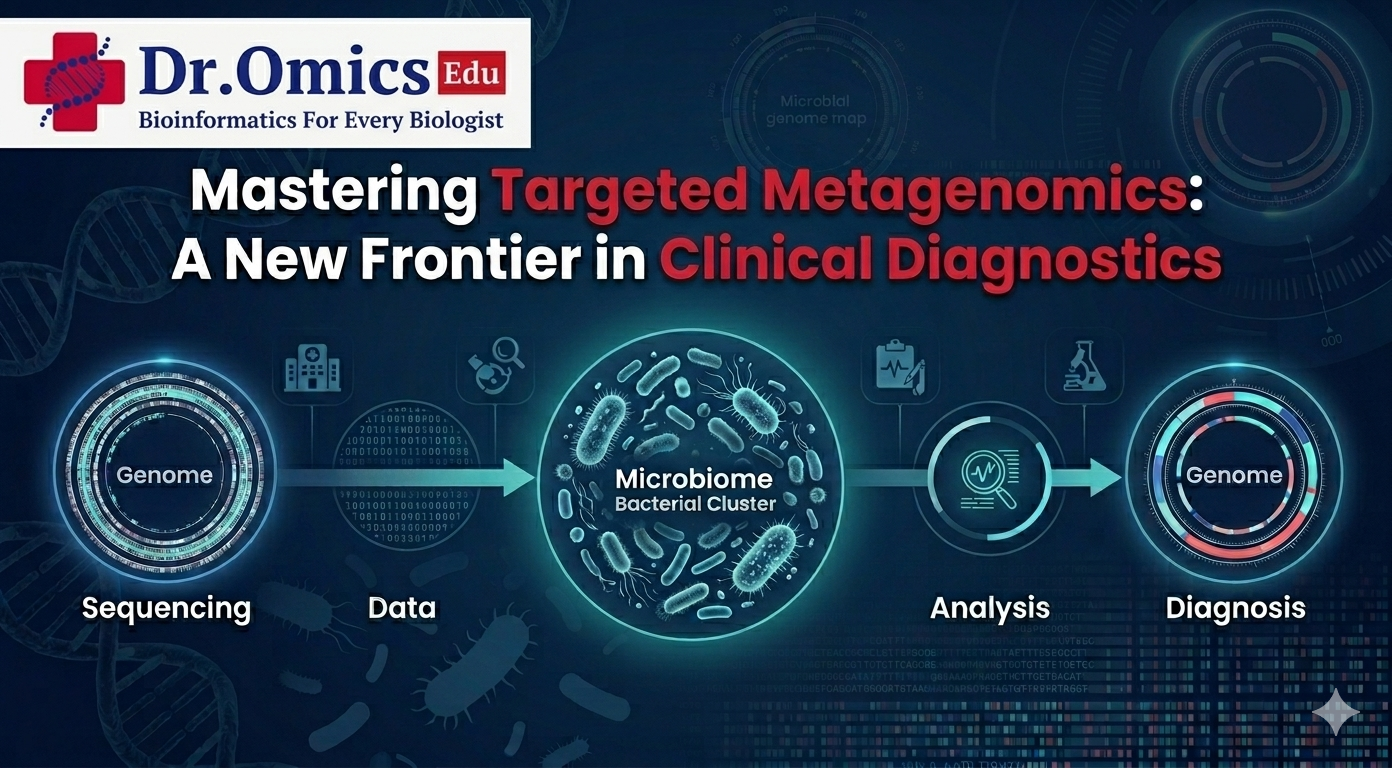
Mastering Targeted Metagenomics: A New Frontier in Clinical Diagnostics
In 2026, the clinical landscape is shifting from asking "What is this infection?" to "What is this entire microbial community doing?" This transition is powered by Targeted Metagenomics, a precise approach that balances the depth of full shotgun sequencing with the speed and cost-efficiency required for modern hospital workflows.
Whether you are a lab director, a bioinformatician, or a clinical researcher, mastering these tools is no longer optional—it is the new standard for precision medicine.
16S rRNA Sequencing vs. Shotgun Metagenomics: The 2026 Verdict
Choosing the right modality is the first step in any targeted sequencing for clinical labs roadmap.
16S rRNA Sequencing remains the "budget-friendly" gold standard for identifying bacteria. It targets a specific genetic marker to tell you who is there, usually at the genus level. It’s fast and requires less computing power, making it ideal for high-volume screening.
Shotgun Metagenomics, by contrast, sequences all the DNA in a sample. It tells you who is there at a strain level and what they are capable of doing (functional profiling). However, it is expensive and generates massive amounts of data that can overwhelm standard clinical servers.
Targeted Metagenomics (the middle ground) uses specific gene panels to capture both taxonomic markers and functional genes, such as antibiotic resistance (AMR) or virulence factors, in a single, efficient run.
Metagenomics Pipeline Tools: From Raw Reads to Reports
Automation is the backbone of modern diagnostics. For clinical utility, your pipeline must be reproducible and compliant with data privacy standards.
- Nextflow & nf-core: The gold standard for scalable, containerized pipelines. The nf-core/mag pipeline is a favorite for assembly-based analysis.
- DRAGEN (Illumina): A hardware-accelerated pipeline providing "sample-to-report" taxonomy and AMR detection in record time.
- One Codex: A secure, cloud-based platform specifically designed for clinical and biodefense applications.
- Taxonomer: Known for its "ultrafast" real-time classification, making it ideal for critical care scenarios like sepsis.
The Professional Roadmap: Microbiome Data Analysis Course
If you are looking to pivot into this field, 2026 offers several high-tier certifications. Mastering the "Dry Lab" (data) is now just as important as the "Wet Lab" (pipetting).
- Physalia Courses: Offers deep dives into R-based analysis for those who want to master statistical rigor.
- Cambridge Advance Online: A 4-week intensive course focused on microbiome research design and translating data into clinical intervention.
- Columbia University Mailman Boot Camp: A specialized "16S rRNA Data Analytics" intensive for healthcare professionals.
Why 2026 is the Year for Clinical Registration
We have reached a tipping point. Major biotech firms are launching 2026 initiatives that integrate multi-omics into newborn screening and oncology. Targeted metagenomics registration for 2026 is already open for several flagship genomic conferences.
If you're heading into the lab this year, ensure your infrastructure is equipped for "De-hosting"—the critical step of removing human DNA from clinical samples so you can focus entirely on the microbial signals.
Stay Ahead of the Curve
The future of diagnostics isn't just about identifying a single pathogen; it's about understanding the entire microbial neighborhood. By integrating targeted metagenomics, labs can provide faster, more accurate, and more personalized patient care than ever before.
