

Super admin . 14th Sep, 2025 9:13 AM
The past decade has taught us that DNA sequence alone cannot fully explain the complexity of human biology. Computational epigenetics the study of heritable changes in gene expression that do not involve alterations in the DNA sequence is now redefining how we interpret genomic information.
From DNA methylation to histone modifications, epigenetic marks play a central role in disease progression, cellular differentiation, and therapeutic response. As datasets grow in size and depth, bioinformatics analysts are increasingly called upon to master epigenome analysis workflows that go beyond traditional sequence interpretation.
Why Epigenome Analysis Matters
Beyond mutations: Epigenetic changes provide an additional regulatory layer explaining why identical genomes can yield different outcomes.
Disease insights: Aberrant epigenetic modifications are strongly linked to cancer, neurological disorders, and autoimmune conditions.
Therapeutic potential: Epigenetic drugs and biomarkers are emerging as front-line players in precision medicine.
The Role of NGS in Epigenetics
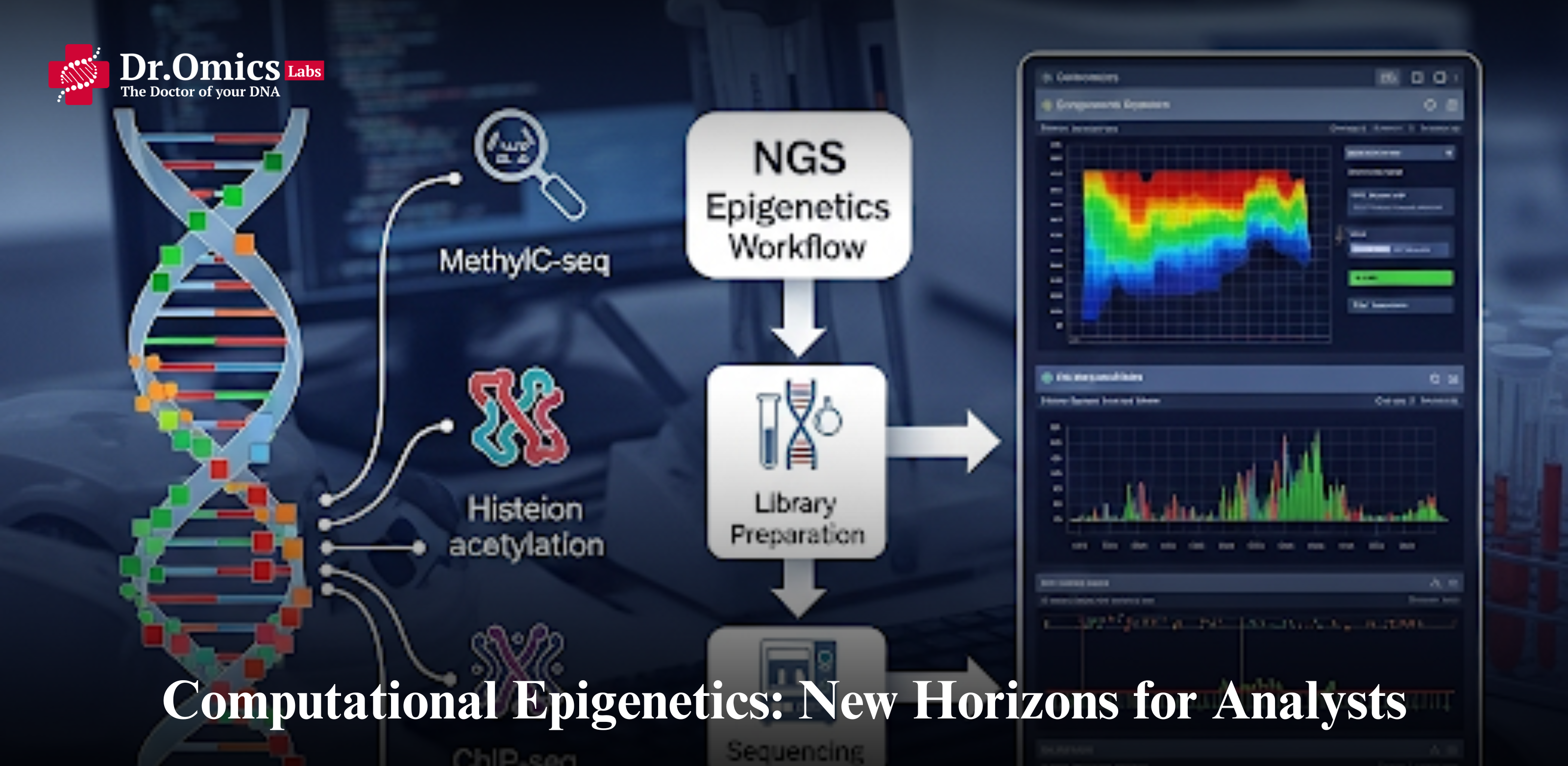
The explosion of NGS epigenetics workflows including ChIP-seq, ATAC-seq, and bisulfite sequencing—has made it possible to map the epigenome at unprecedented resolution. For analysts, this means developing pipelines capable of:
Handling high-throughput sequencing data.
Integrating epigenetic datasets with genomics and transcriptomics.
Applying machine learning to uncover regulatory signatures.
Skills Analysts Must Build
To stay ahead, a bioinformatics analyst must now complement classical genomics expertise with computational epigenetics skills:
Data pre-processing (QC, alignment, and peak calling).
Statistical modeling of epigenetic landscapes.
Multi-omics integration for systems biology insights.
Familiarity with specialized tools such as Bismark, MACS2, and Seurat.
The Future Outlook
As we move into 2025 and beyond, computational epigenetics is poised to become a mainstream component of bioinformatics training and industry-ready curricula. Analysts equipped with NGS epigenetics workflows and integrative analysis skills will be uniquely positioned to drive discoveries in healthcare, agriculture, and environmental sciences.
Final Thought:
Epigenetics is not just an added layer of complexity. it is the language through which cells remember, adapt, and evolve. For bioinformatics analysts, embracing this frontier means unlocking a deeper, richer understanding of biology itself.
